
What Is a Sump Fountain? How Sump Water Features Work
30 September 2026 · Geoffs Garden Ornaments · Buying Guides · sump fountains, modern design fountains, garden fountain
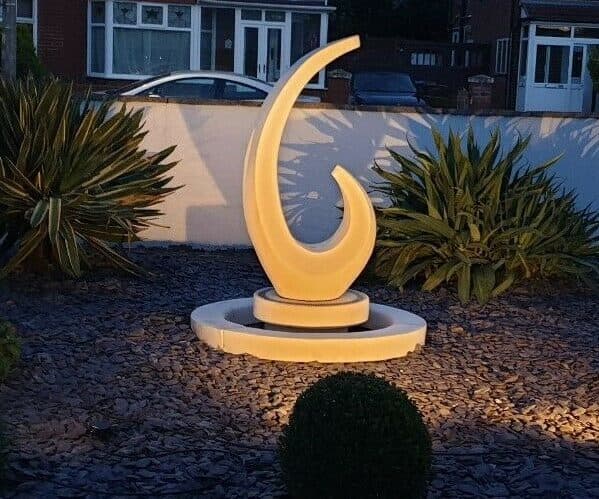
Most garden fountains hold their water where you can see it: a tiered fountain stands in a pool surround, a self-contained feature keeps its reservoir in the bowl or the plinth it sits on. A sump fountain does neither. The water is stored in a tank set into the ground beneath the piece, and the sculpture appears to rise straight out of the paving.
It's the arrangement behind most of the modern water features you'll have seen in a courtyard or on a contemporary terrace, and it's worth understanding before you choose, because it's the one type that involves some groundwork.
How a sump works
A sump is simply a reservoir below ground level. The sequence is the same as any other fountain, just hidden:
- A tank sits in an excavated hole, its rim flush with the finished surface.
- The pump sits inside the tank, in the water.
- A strong grille or grid covers the tank and carries the weight of the sculpture above it.
- Water is pushed up through the sculpture, runs down its faces, falls through the grille, and returns to the tank.
- Pebbles or a decorative surround are laid over the grille, concealing it completely.
What you see is a sculpture with water running over it, disappearing into stones at its foot. There is no visible pool, and no raised edge.
Why choose one
- It suits a modern garden. No pool surround means no traditional stonework — the piece reads as a sculpture, not as a fountain in the Victorian sense.
- It's safer around small children. There's no standing water accessible at the surface. This is the reason a great many people choose one, and it's a good one.
- It takes up less room. A pool surround needs a metre or more of diameter around the fountain. A sump needs the footprint of the sculpture and not much else, which is what makes it work on a small terrace.
- It loses less water. A below-ground reservoir is shaded and cool, so it evaporates more slowly than an open pool in full sun.
- Fewer leaves in it. The grille and pebbles keep most debris out of the water.
What installing one involves
This is the honest trade-off. A self-contained fountain is set down, filled and plugged in. A sump fountain needs a hole.
You'll need to excavate for the tank, get the rim level and firmly supported, run an armoured cable from the house, and then reinstate the surface around it. On a lawn or a border that's an afternoon with a spade. Through an existing patio it means lifting slabs, and it's a job most people give to a landscaper.
Two things worth getting right at the start, because they're expensive to change afterwards:
- Level. A sculpture set even slightly out of true is obvious once water runs down it — the sheet of water goes to one side. Get the grille dead level and check it again before the pebbles go on.
- Access to the pump. You will need to lift the grille to clean the pump and top up the water. Lay the pebbles so a section can be moved without dismantling the whole thing.
One more practical point: a sump holds less water than an open pool, so the level drops faster in hot weather and needs checking more often. Running a pump dry is the quickest way to kill it.
Sump, pool surround, or self-contained?
- A fountain with a pool surround is the traditional arrangement — the fountain stands in a visible stone pool. The most impressive, the most water, the most space.
- A self-contained fountain holds its own water and needs nothing but a level base and a socket. The easiest by a distance — there's a fuller guide to these in our post on self contained water features.
- A sump fountain sits between them: the clean look of a modern sculpture with no visible water, in exchange for some groundwork at the start.
The six in our range
Our Sump & Modern Design Fountains page holds six pieces. Three come with a decorative surround included, and three are supplied for you to finish with your own pebbles or paving:
- Bowl Tub Fountain with Sump & Decorative Surround
- Shard Sculpture Fountain with Sump & Decorative Surround
- Flame Sculpture Fountain with Sump & Decorative Surround
- Shard Sculpture Fountain with Sump
- Flame Sculpture Fountain with Sump
- Ball or Eye Cassius Fountain
Lighting one
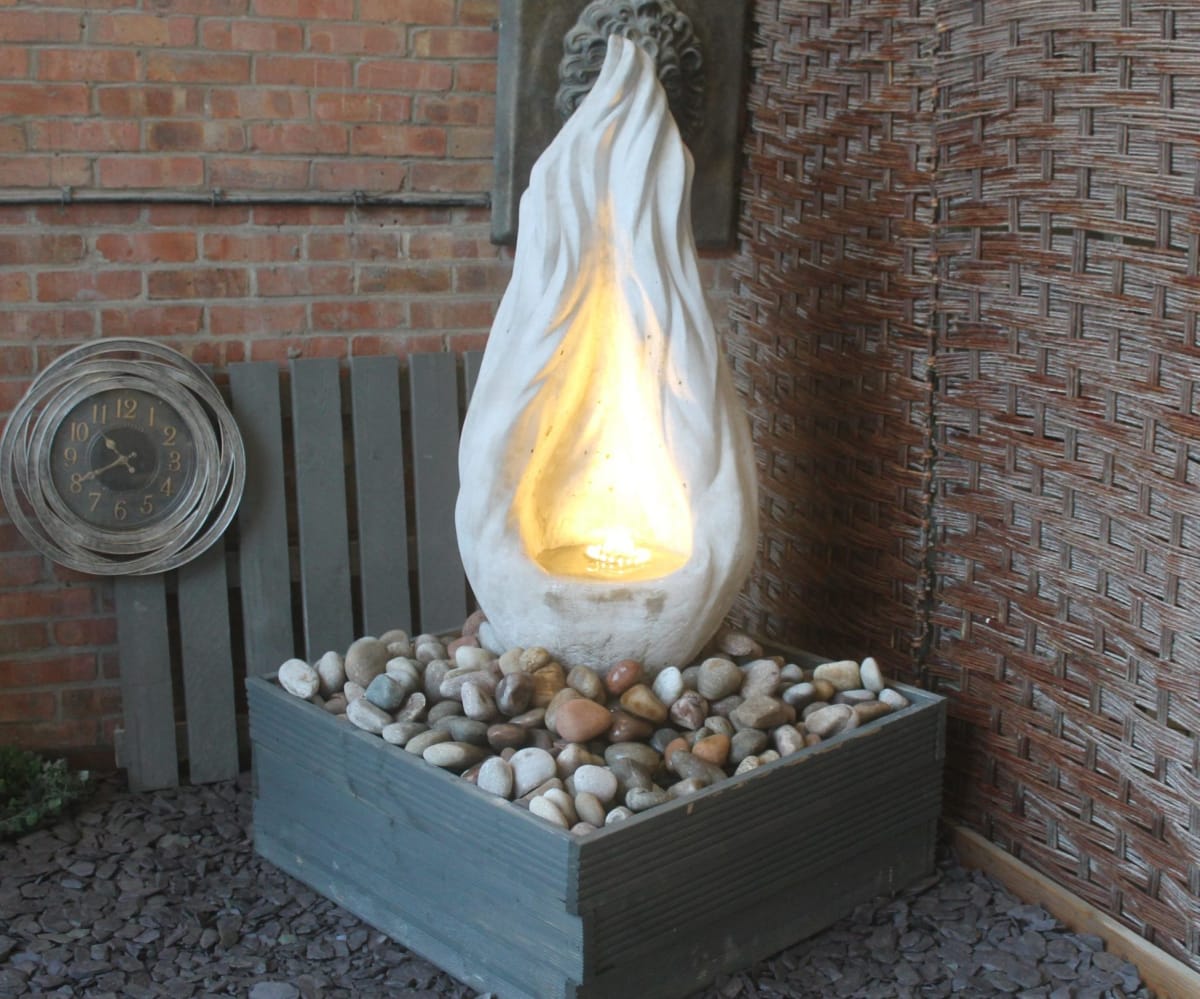
Sump fountains light beautifully, because the light source can be hidden among the pebbles and the sculpture is lit from below. A LED light ring set into the grille around the base is the usual approach — see our guide to lighting a water feature at night.
If you'd rather not dig
The same sculptures appear in our New Design Fountains range set into pools and bowls above ground — the Shard, the Flame and the Riviera bowls among them. Same look, no excavation. Our guide to installing a contemporary designer fountain covers those.
If you're not sure which suits your garden, ring the office and describe the spot — it's a five-minute conversation and it saves a lot of second-guessing. Prices include delivery to most mainland UK postcodes.
The product in this post
Related posts
30 September 2026
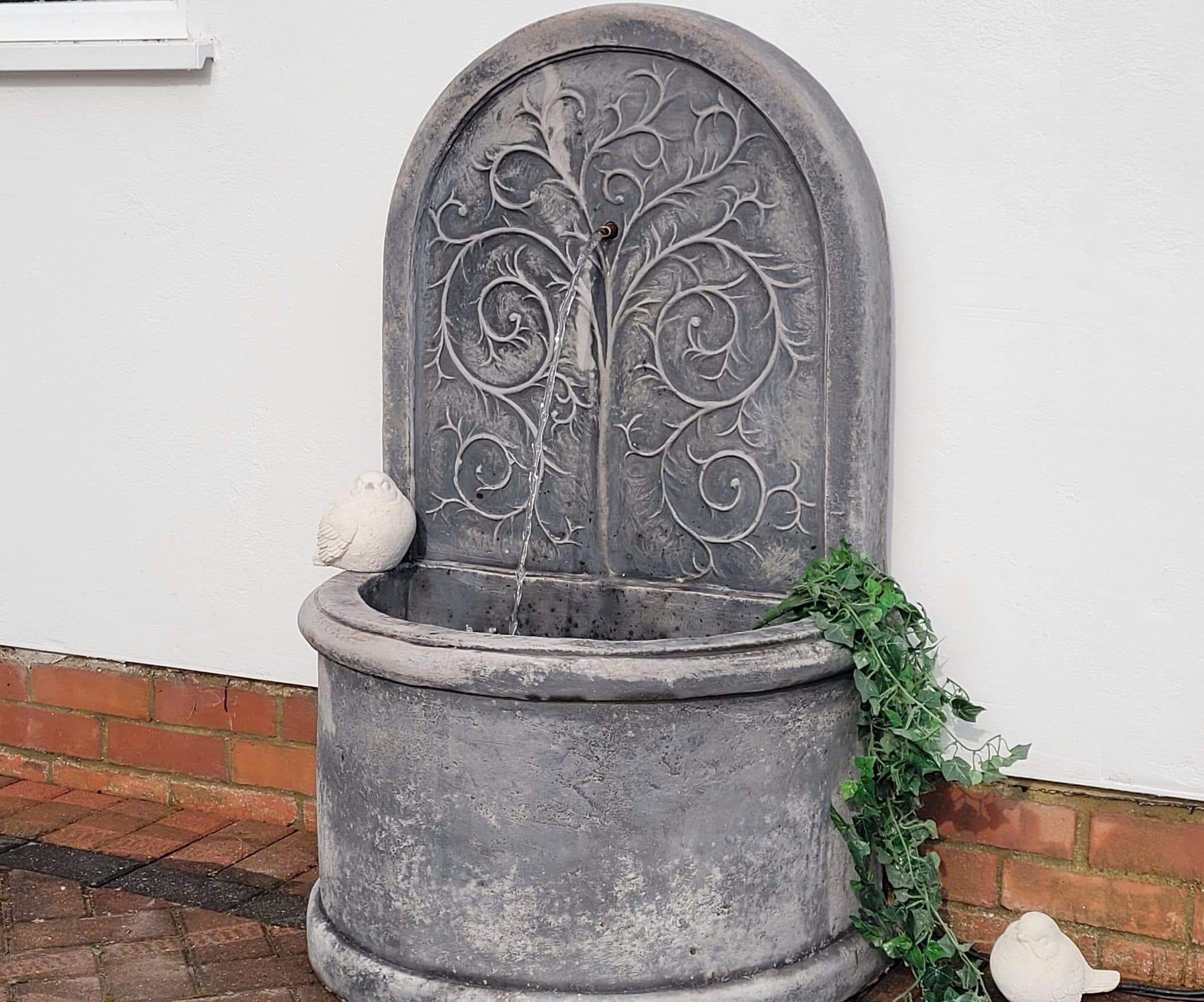
Wall Fountains for Courtyards and Small Gardens
When there's no floor space to give up, the water goes on the wall. What a wall fountain needs behind it, how to deal with sound in an enclosed courtyard, and the range from a small Tapas mask to a six-foot Niagara.
30 September 2026
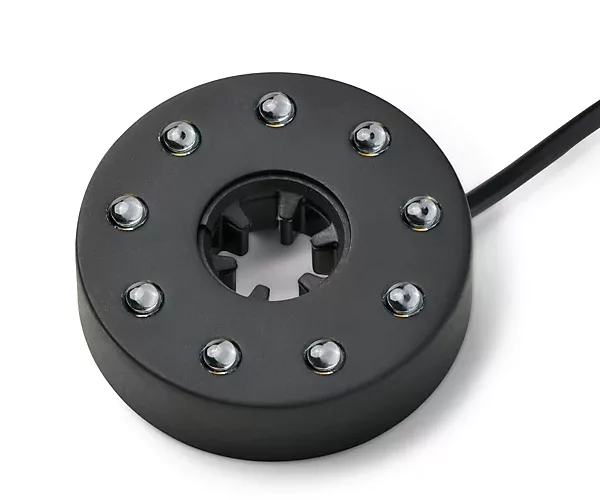
Lighting a Water Feature at Night: LED Rings, Underwater Lights and Spots
A lit fountain is a different thing after dark, and it doubles the hours you get out of it. The three kinds of light we supply, where each one goes, white versus colour changing, and getting the power there safely.
14 September 2026
Garden Urns on Plinths: Pairs, Proportions and Planting
Stone urns are one of the oldest devices in garden design. When to choose a pair or a single urn, how to match an urn to a plinth, where they look best, and what to plant in them through the year.