
Lighting a Water Feature at Night: LED Rings, Underwater Lights and Spots
30 September 2026 · Geoffs Garden Ornaments · Buying Guides · fountain lighting, led lighting, fountain upgrades
A fountain earns its place in daylight. Lit, it earns it twice — because from about four in the afternoon in December until the following spring, an unlit fountain is a dark shape and a sound, and a lit one is the reason you look out of the window.
Water is unusually good at taking light. It moves, it refracts, and a single small lamp under a falling sheet of water does more than a floodlight pointed at a wall. You need less than you think.
The three kinds, and where each one goes
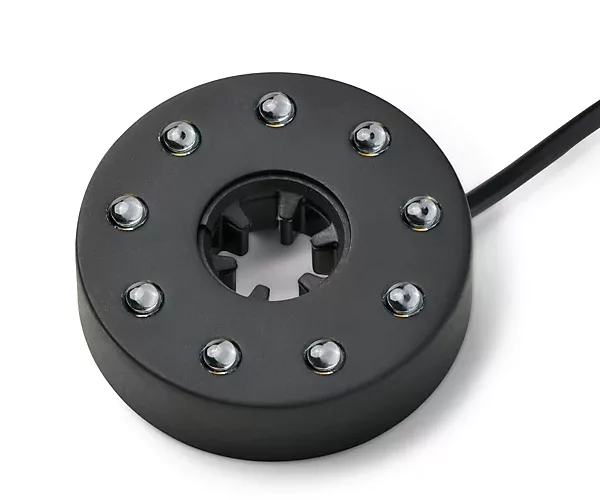
Light rings
A LED light ring sits around the base of a sculpture or in the mouth of a bowl and lights the piece from below, through the water running down it. It's the neatest solution for a modern feature — a Shard, a Flame, a sphere — because the light is completely hidden and what you see is the sculpture glowing along its wet faces.
This is the one to fit to a sump fountain, where it can be tucked under the pebbles at the grille.
Underwater lights
Small sealed lamps that sit in the pool itself, pointing up. We supply them in sets of three, sized to the feature:
- Set of 3 LED underwater lights for self-contained fountains
- Small set of 3 for medium features
- Medium and large sets of 3 for bigger pools
- A set of 6 where a wide pool needs even coverage
Three lamps spaced evenly around a round pool, all aimed up at the fountain, is the arrangement that works. Resist the urge to point them at each other.
Spotlights
Lamps sited outside the water, on the ground, lighting the piece from the side or behind. This is what you want for something that isn't a fountain at all — a statue, a pair of lions, a planted urn — and for throwing a fountain into silhouette rather than lighting its face. Our set of 3 RGBW spotlights are controlled over Bluetooth from a phone.
There are also white LED strip lights and colour-changing strips for running along a pool edge or under a lip, where you want the light itself to be the effect.

White or colour changing?
Both are in the range and it isn't really a matter of taste — they do different jobs.
- Warm white suits cast stone. It reads as stone lit at night, and it sits comfortably next to the light coming out of the house. For a traditional tiered fountain in front of a period property, it's the only sensible answer.
- Colour changing (RGBW) suits a contemporary piece, and it's genuinely fun — a blue-lit sphere on a modern terrace is a different object after dark. It also gives you white when you want it, which is why RGBW rather than plain RGB is worth having.
A tip on colour, from gardens we've seen: pick one and leave it. A feature slowly cycling through the spectrum all evening stops being a fountain and becomes a fairground. The cycling mode is for showing visitors.
Getting the power there
This is the part to get right rather than improvise.
- Anything mains-powered outdoors needs RCD protection and, unless you already have a suitable outdoor socket, an electrician. Outdoor installations are notifiable work in England and Wales in most circumstances — this is not the corner to cut.
- Most fountain lighting is low voltage, running from a transformer that lives somewhere dry. That's the easier and safer arrangement, and it's what we supply.
- Bury cable at a sensible depth and protect it — in a conduit, and ideally along a route you'll remember. Cables laid just under the turf get found by a fork.
- Leave a service loop of slack cable at the feature. At some point you'll want to lift the pump, and having 300mm to play with makes it a five-minute job instead of an hour.
Solar, where it fits
Solar underwater lights need no cable and no electrician, which for a feature at the far end of a garden is a real advantage. In exchange they're dimmer, they depend on where you can put the panel, and in December they may manage an hour after dusk. For a small patio feature they're a good answer; for lighting a large fountain as a nightly focal point, run a cable.
Four things worth doing
- Light from below, not from the front. Light thrown across a fountain flattens it. Light coming up through falling water is what makes it look like something.
- Aim at the water, not the stone. The moving sheet is what does the work.
- Put it on a timer with the pump, so both come on at dusk and go off when you go to bed.
- Check it from indoors. Set the lamps up, then go and look through the window you'll actually be looking through. It almost always needs one more adjustment.
Keeping the lights working
Underwater lamps go dull with limescale and algae long before they fail — wipe the lenses when you clean the pump and most "broken" lights come back. Lift them out before the frosts along with the pump; see winter care for stone fountains.
See the full range on our pond liners, pumps and lights page, or browse fountain upgrades and extras. Prices include delivery to most mainland UK postcodes.
The product in this post
Related posts
30 September 2026
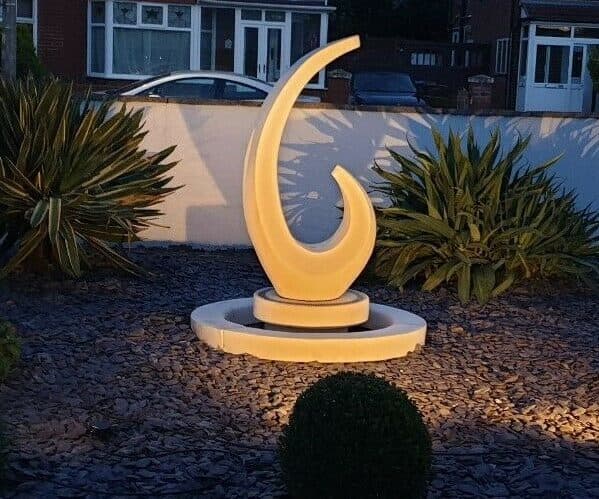
What Is a Sump Fountain? How Sump Water Features Work
A sump fountain hides its reservoir below ground, so the sculpture appears to rise straight out of the paving with no pool around it. How they work, what installing one involves, and the six in our range.
30 September 2026
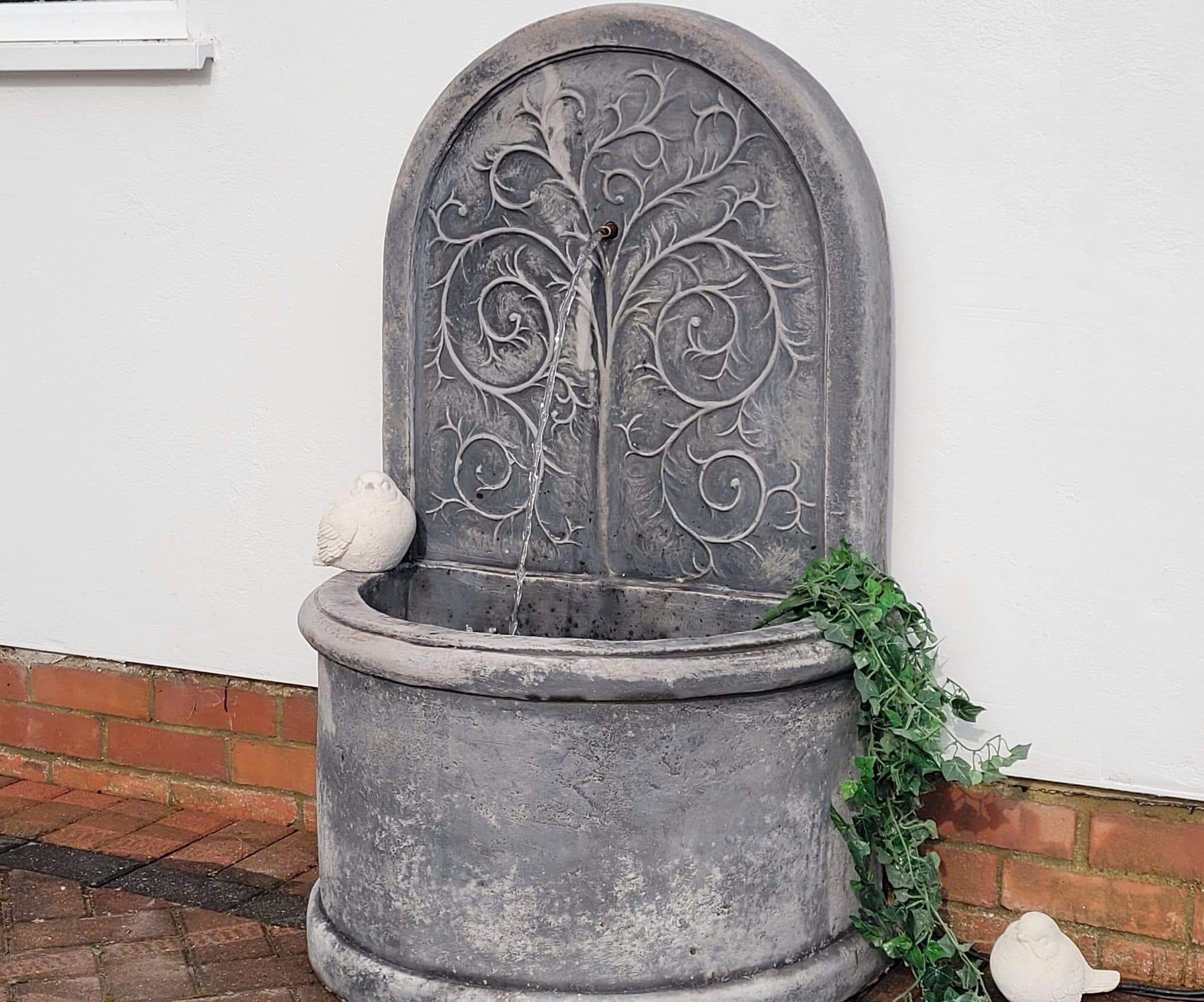
Wall Fountains for Courtyards and Small Gardens
When there's no floor space to give up, the water goes on the wall. What a wall fountain needs behind it, how to deal with sound in an enclosed courtyard, and the range from a small Tapas mask to a six-foot Niagara.
14 September 2026
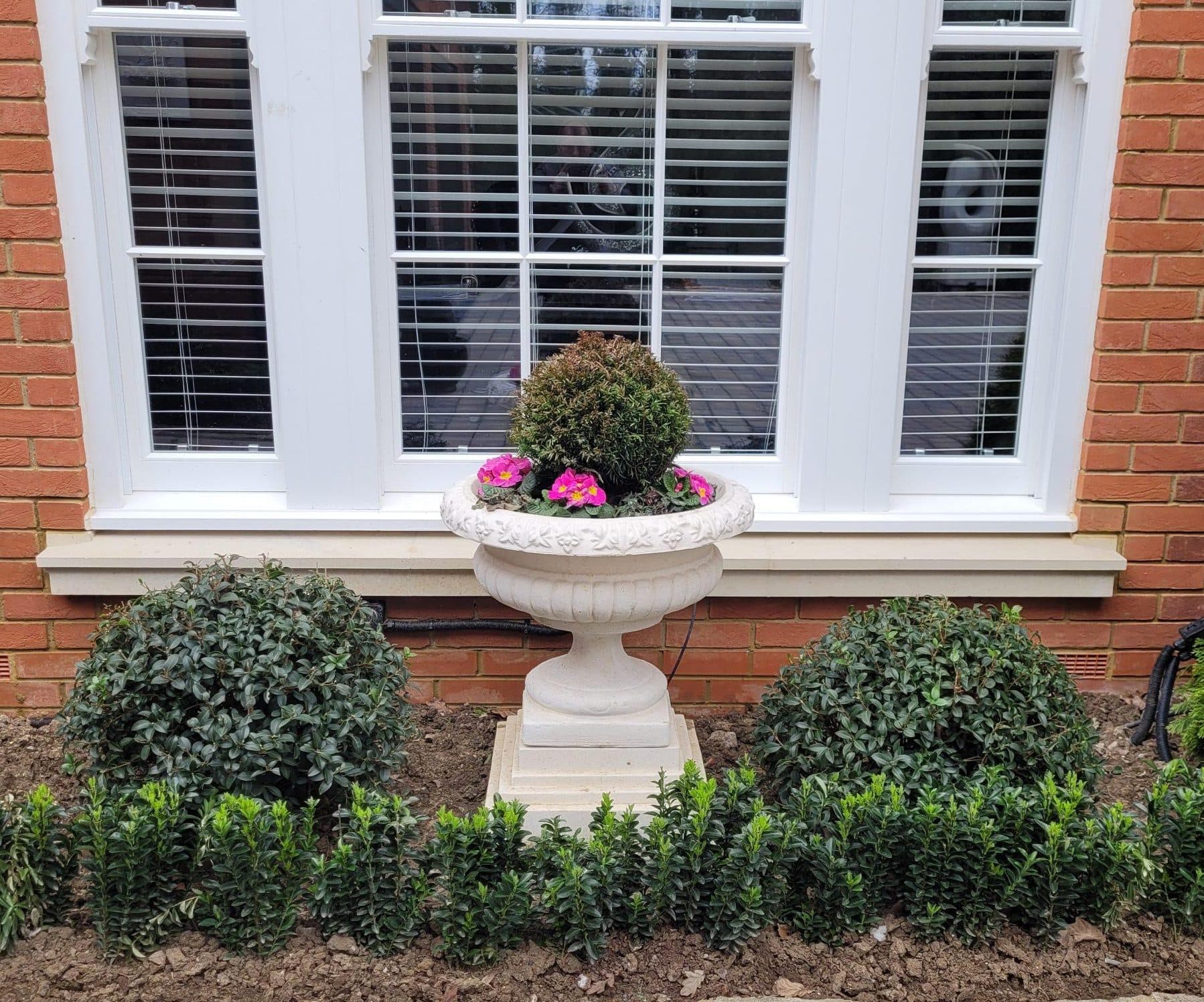
Garden Urns on Plinths: Pairs, Proportions and Planting
Stone urns are one of the oldest devices in garden design. When to choose a pair or a single urn, how to match an urn to a plinth, where they look best, and what to plant in them through the year.