
Easter Island Heads in a British Garden: Scale, Siting and Grouping
18 October 2026 · Geoffs Garden Ornaments · Buying Guides
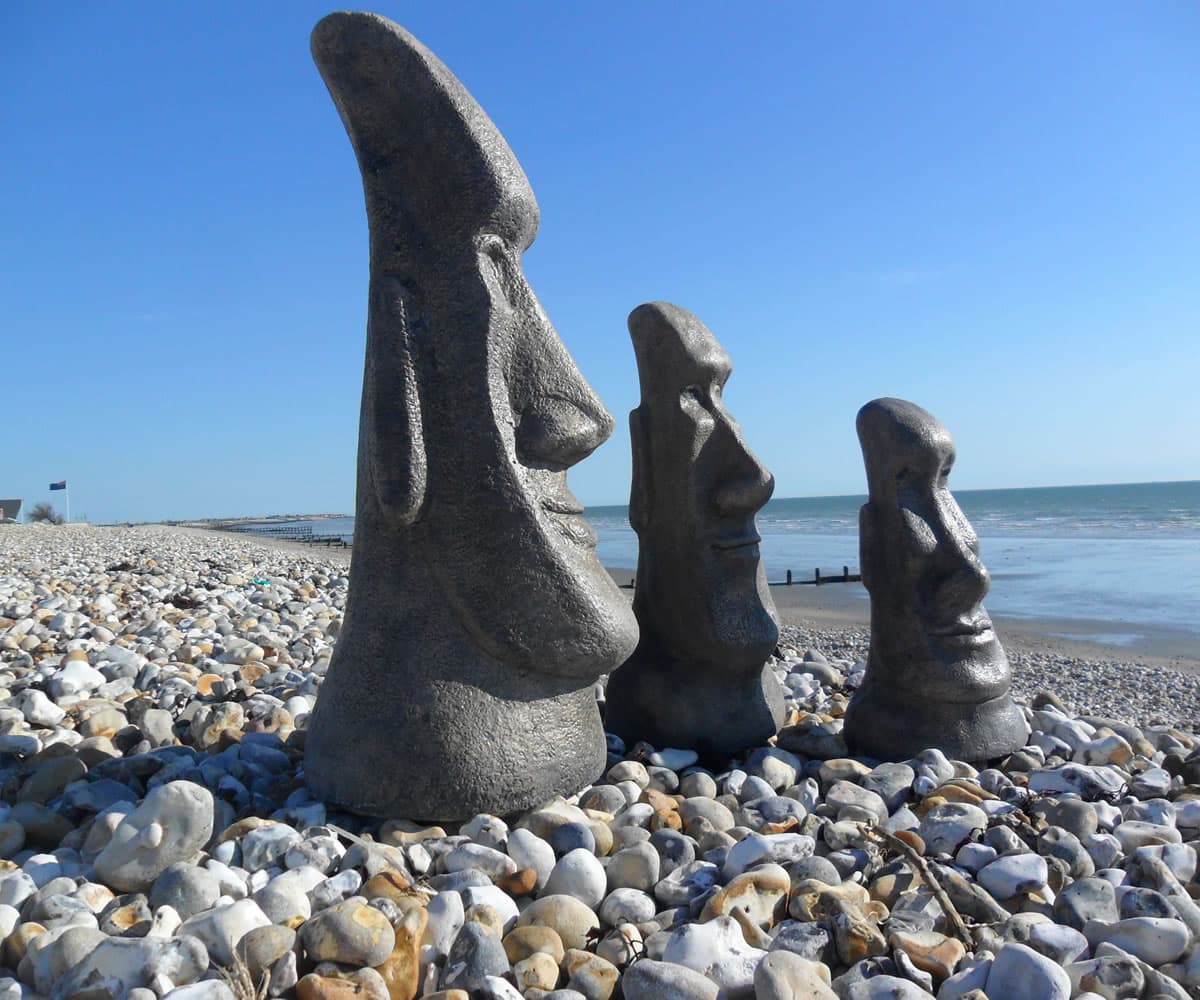
Easter Island heads divide gardeners more than almost anything else we sell, and the reason is nearly always placement rather than taste. Used plainly, in the right planting, a moai-style head is one of the most striking things you can put in a garden. Used as one ornament among several, it looks like a holiday souvenir that has outgrown the shelf.
The scale question comes first
These are pieces that depend on mass. The original statues are monumental, and the impression they give — weight, stillness, age — comes from being big enough to feel immovable. A small head on a patio among pots reads as a curiosity. The same shape, large, half-buried in planting, reads as something that was there before the garden was.
So the honest advice is to go larger than feels comfortable, and to buy fewer pieces to afford it. If the choice is between three small heads and one extra-large one, the single large piece will almost always look better.
Why sets of three work
Where multiples do work, odd numbers work better than pairs. A pair invites the eye to compare the two and look for symmetry, which is the wrong instinct for these pieces — the originals stand in irregular lines, not matched gateways. A group of three, set at different depths in the planting and turned at slightly different angles, suggests a row receding rather than an arrangement.
Two rules make a group of three look intentional:
- Vary the spacing. Two closer together and one set apart looks natural. Three evenly spaced looks like a fence.
- Vary the depth. Bring one forward of the others. Three in a straight line parallel to a path or wall reads as decoration.
Planting that suits them
These heads sit best against texture and movement, with as little competing detail as possible:
- Tall grasses. Miscanthus, Stipa and similar — the contrast between still stone and moving grass is the whole effect.
- Bamboo and large-leaved planting. Fatsia, phormium, tree ferns. Anything that reads as jungle rather than border.
- Gravel, slate or bare soil at the base. Letting the piece emerge from the ground rather than stand on it is what makes it look settled.
- Dark backgrounds. A yew hedge, a dark fence or deep shade behind the piece throws the profile forward.
What does not suit them is a mixed ornamental setting. A moai head beside an urn, a sundial and a classical statue is four ideas arguing. If you want one of these, give it its own area and let it be the only sculptural thing in view.
Setting them into the ground
Partially burying the base is the single most effective trick, and it costs nothing. The originals are buried to varying depths, which is why photographs of them show heads apparently growing out of the hillside. Sinking the base of a head by even a few inches, then bringing planting or gravel up to it, removes the visual giveaway of a flat bottom edge sitting on a flat surface.
Do make sure the piece is sitting level and fully supported underneath before you backfill — stone bedded on soft or uneven ground will settle out of true, and a head leaning backwards is far more noticeable than one standing straight.
Finish
For these, the plainer the better. Classic Limestone — a pale grey close to the colour of a button mushroom — or the darker Antique Stone wash both read as weathered rock, which is what you want. Bronze and black finishes are striking but push the piece towards contemporary sculpture and away from the archaeological impression most people are after. All the options are on our colour options page.
The stone is frost proof and happy outdoors all year, and because a head holds no water there is nothing to drain before winter.
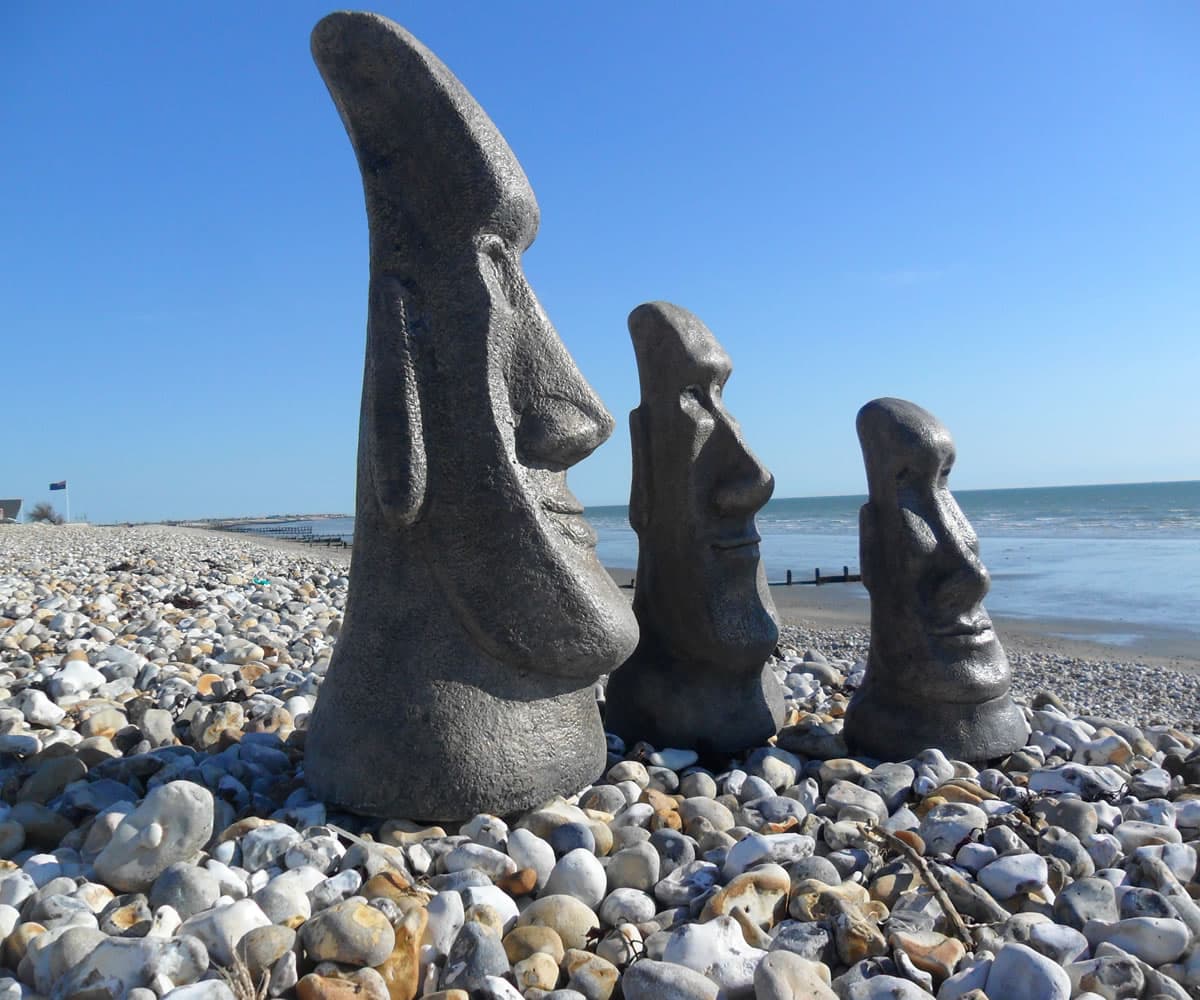
We stock these as a set of three and as a single extra large head. If you are working out which size suits the space, our guide to choosing the size of a large ornament covers the arithmetic.
The product in this post
Related posts
18 October 2026
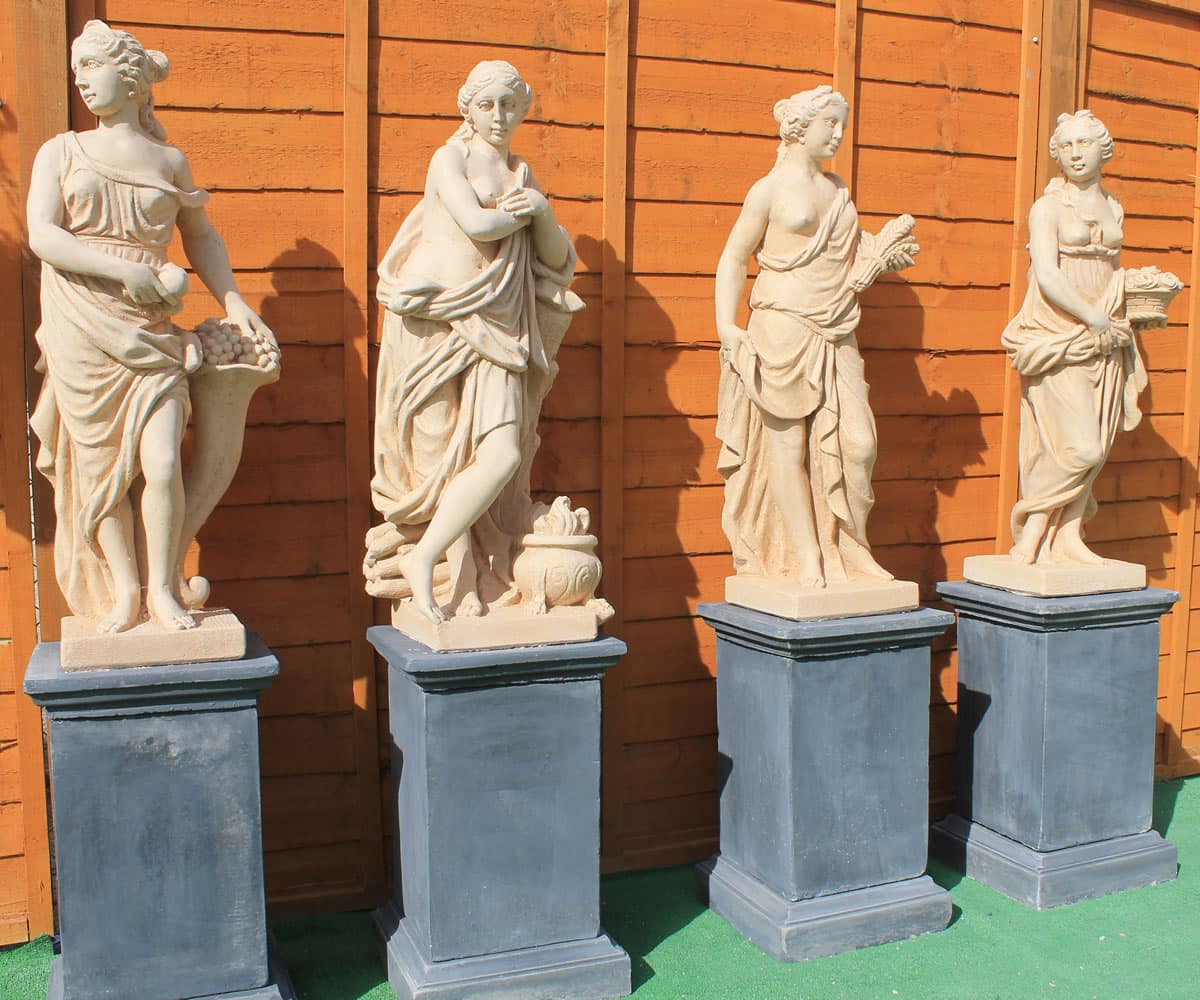
Choosing a Stone Finish: What Each Option Actually Does Outdoors
Some of our finishes are the natural colour of the stone mix and never need anything doing. Others are paint, and one of those has a lifespan worth knowing about.
18 October 2026
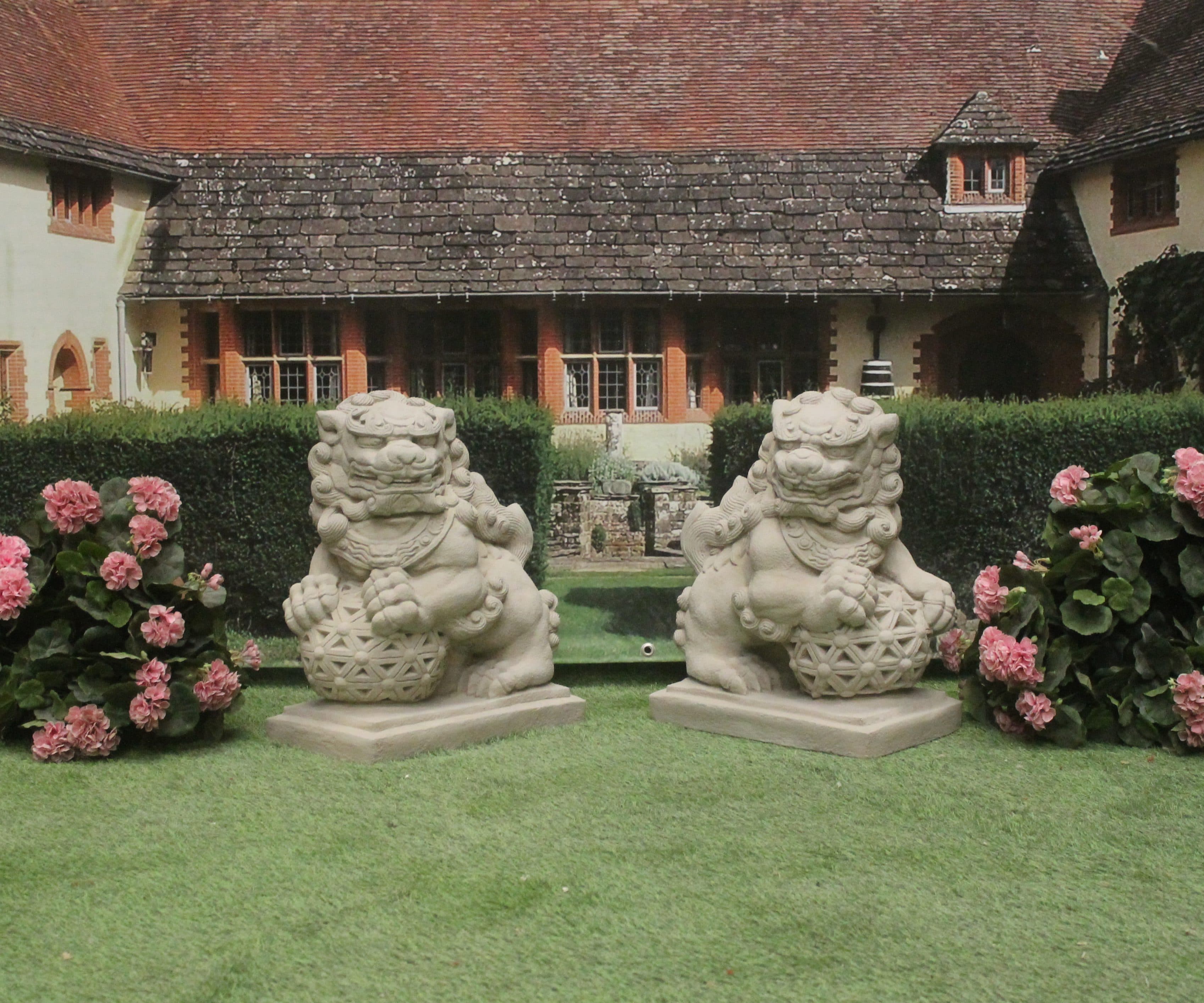
Chinese Foo Dogs and Stone Lions: Pairs, Placement and Which Way They Face
Guardian statues are one of the few garden ornaments with rules attached. Most of them are worth following, because a pair placed properly looks deliberate rather than decorative.
30 September 2026
What Is a Sump Fountain? How Sump Water Features Work
A sump fountain hides its reservoir below ground, so the sculpture appears to rise straight out of the paving with no pool around it. How they work, what installing one involves, and the six in our range.