
Self Contained Water Features: The Easiest Way to Add a Fountain to a Small Garden
18 August 2026 · Geoffs Garden Ornaments · Buying Guides
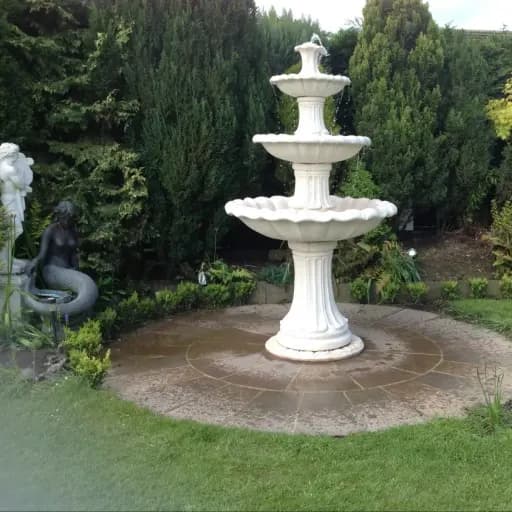
If you want running water in a small garden, a self contained feature is almost always the right answer. No pond, no excavation, no liner, no builders. It sits on your existing patio, plugs in, and recirculates its own water.
That simplicity is the whole appeal, and it's why this is where most people start.
How a self contained feature works
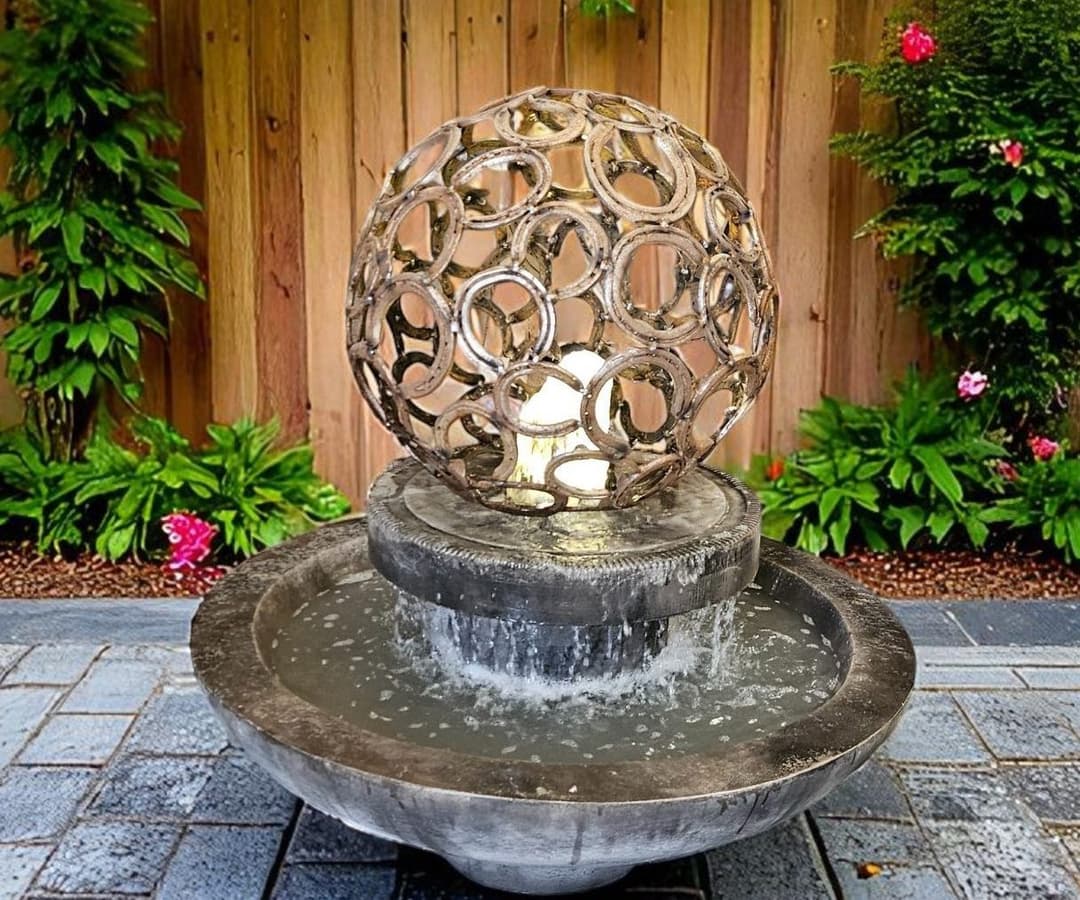
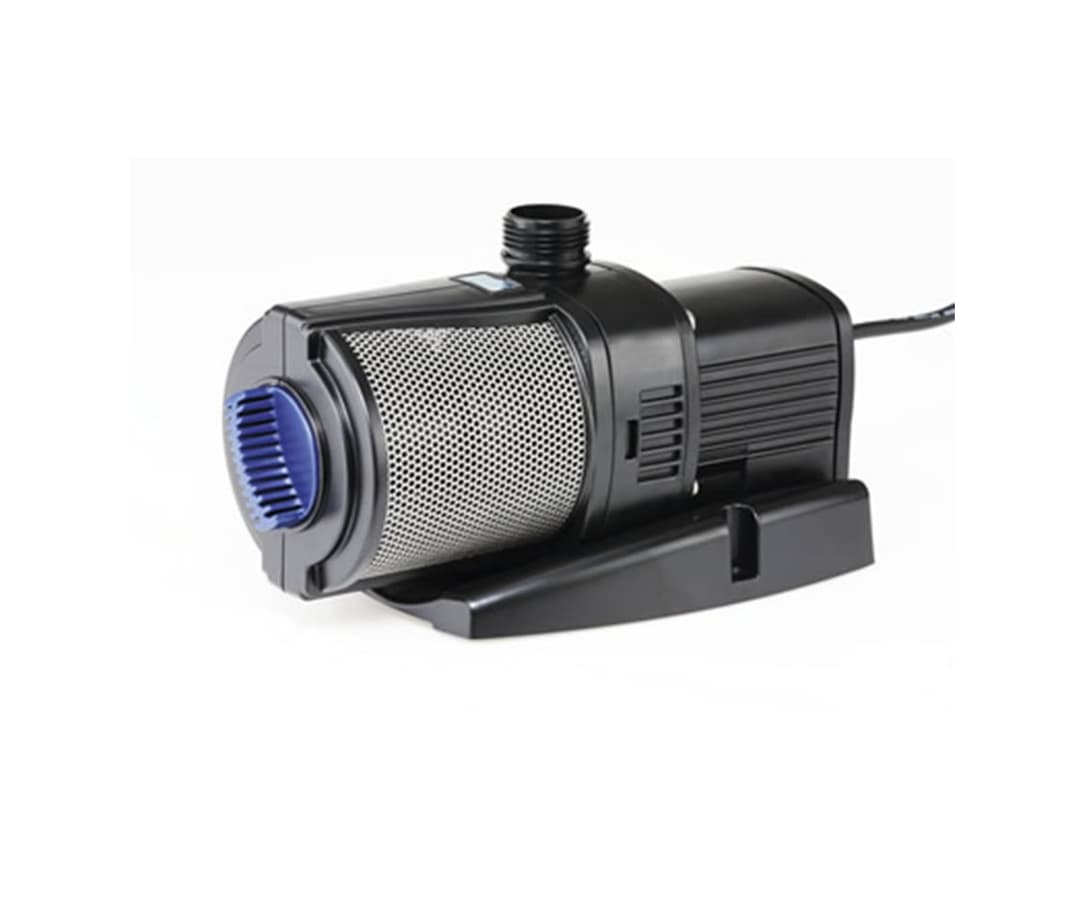
There's a reservoir concealed in the base of the feature. A small submersible pump sits inside it, draws water up through the feature, and the water falls back into the reservoir to be circulated again.
Nothing is plumbed in. You fill it with a hose or a watering can, and top it up as it evaporates.
The only practical consequence worth knowing is that a small reservoir holds less water, so it needs topping up more often. In a hot, dry spell you may be adding water weekly. It takes a minute, but don't let a reservoir run dry — running a pump without water is the quickest way to destroy it.
Which type suits which garden
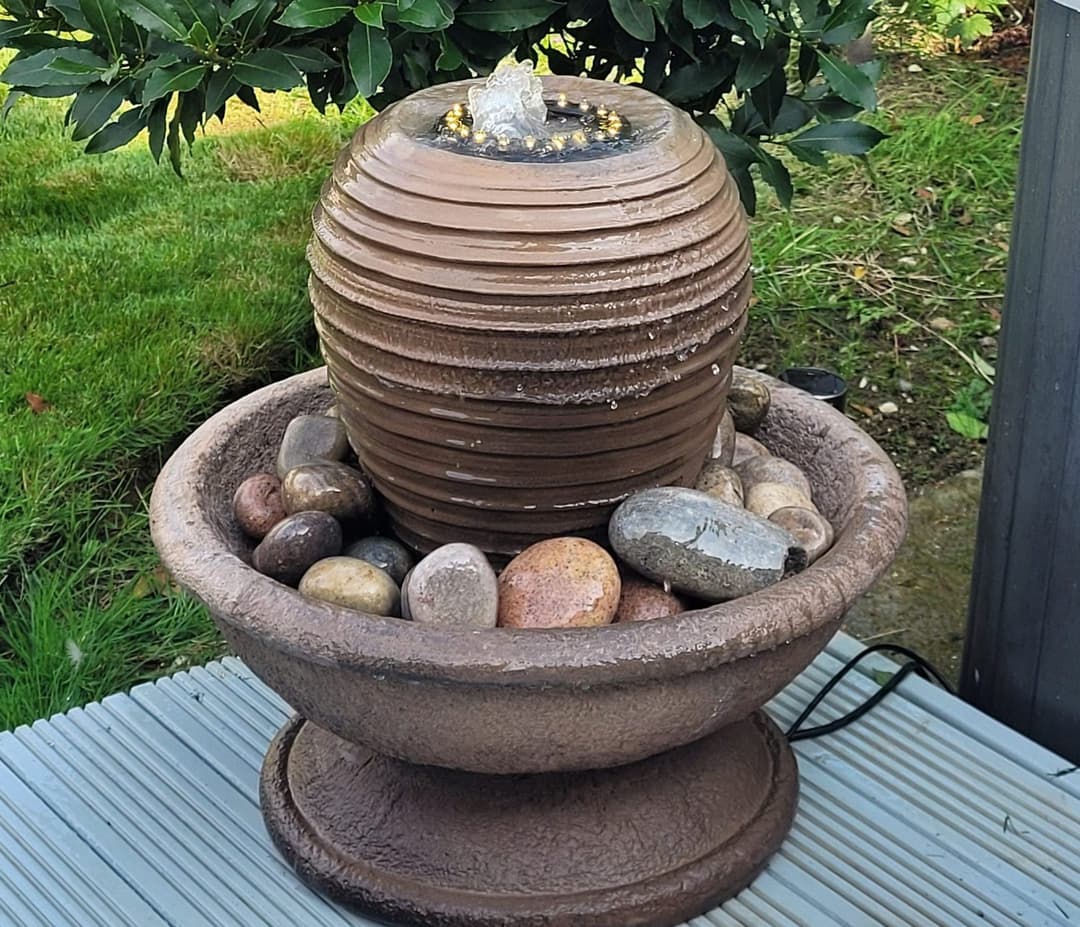
Millstones and pebble pools. Water rises through the centre and spreads across the surface before disappearing into pebbles below. Almost no standing open water, which makes these a sensible choice where small children visit. They also sit low, so they don't interrupt a view.
Balls and spheres. Water films evenly down a smooth curved surface. These read as contemporary and work well in minimal or architectural gardens, particularly on a plinth where the sphere sits at eye level from a seating area.
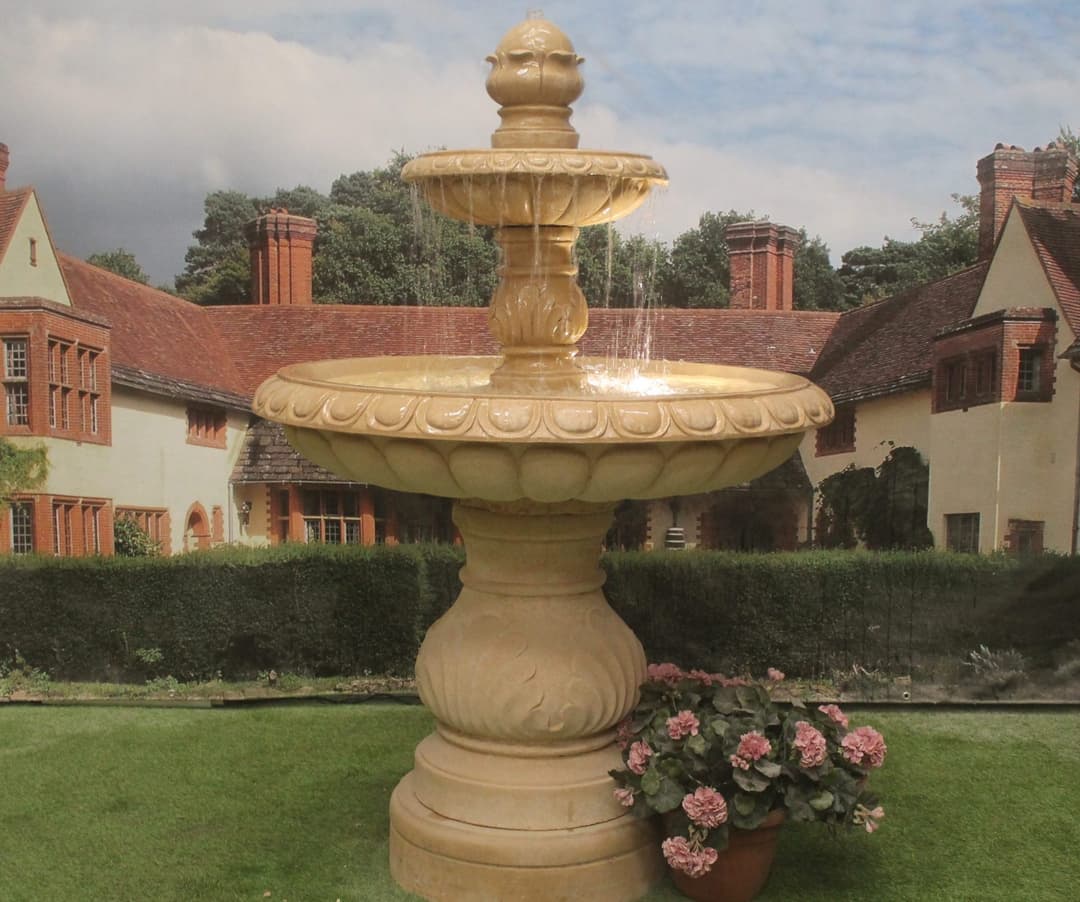
Urns, pots and planting features. Water spills from the rim of a classical urn form. These suit traditional gardens and pair well with surrounding planting, and some double as planters.
Character pieces. Frogs, ducks and similar. Smaller, informal, and often the right call for a family garden or a courtyard where a formal feature would feel overdone.
Getting the size right
The most common mistake in a small garden is going too small, not too large.
A useful rule: your usual viewing point should be roughly two to three times the feature's height away from it. If you'll be sitting three metres away, something around a metre tall works. A 40cm feature at the far end of the garden simply won't register — you'll have bought something you can't really see.
Because these sit on a hard surface with no pool surround, their footprint is much smaller than a fountain-and-pool combination. A feature that looks substantial may occupy less than a square metre of patio.
Siting one
Put it where you'll hear it. This is the single most underrated point. The sound is at least half of what you're buying, and a feature sited for visual balance at the bottom of the garden delivers none of it to where you actually sit.
Keep it close to seating, or near a door or window you leave open.
Two other things worth checking. Avoid siting under deciduous trees if you can — leaf fall clogs pumps and accelerates algae. And think about the power supply before you commit to a position.
Power
Most self contained features run from a mains pump, which needs a properly rated outdoor socket. If you don't have one, have a qualified electrician fit it. Outdoor electrics in the UK must be RCD protected and installed to current regulations, and standing water is not the place to improvise.
Solar pumps are a real alternative for smaller features and remove the cabling question entirely. The trade-off is honest: output drops on overcast days, and a solar feature will not run consistently through a British winter.
Maintenance
Realistically: top up the water, keep leaves out, clean the pump filter every few weeks in summer, and give the stonework a brush occasionally.
Algae is the usual complaint. Shade helps, keeping organic matter out helps more, and treatments are available if needed. Direct all-day sun on a small volume of water is what makes it worst.
Through winter, many people drain and cover their feature during hard frosts. Our guide to materials, methods and winter care goes into this properly.
Is a self contained feature the right choice?
Choose self contained if you have a patio or terrace, want to avoid groundwork entirely, might want to move it later, or you're adding water to a small or courtyard garden.
Consider a fountain with a pool surround instead if you want a large body of visible water, a formal centrepiece for a lawn, or room for lighting and planting in the pool.
Neither is better. They solve different problems.
See them running
Photographs don't convey sound, and sound is most of the point. Our Chichester showroom has self contained features running across the range — Monday to Friday 8am to 4pm, Saturday mornings.
Call 01243 532 390 with any questions, 8am to 8pm, seven days a week. Everything is made here in the UK.
Related posts
30 September 2026
What Is a Sump Fountain? How Sump Water Features Work
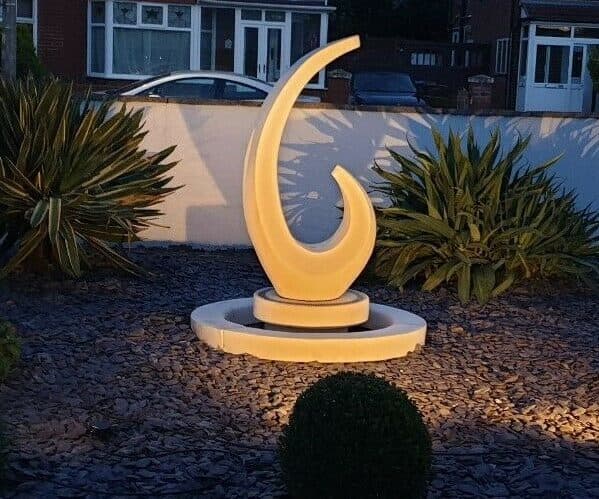
A sump fountain hides its reservoir below ground, so the sculpture appears to rise straight out of the paving with no pool around it. How they work, what installing one involves, and the six in our range.
30 September 2026
Lighting a Water Feature at Night: LED Rings, Underwater Lights and Spots
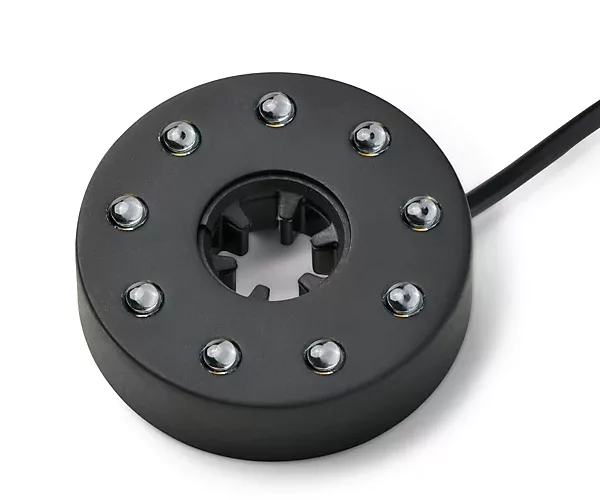
A lit fountain is a different thing after dark, and it doubles the hours you get out of it. The three kinds of light we supply, where each one goes, white versus colour changing, and getting the power there safely.
30 September 2026
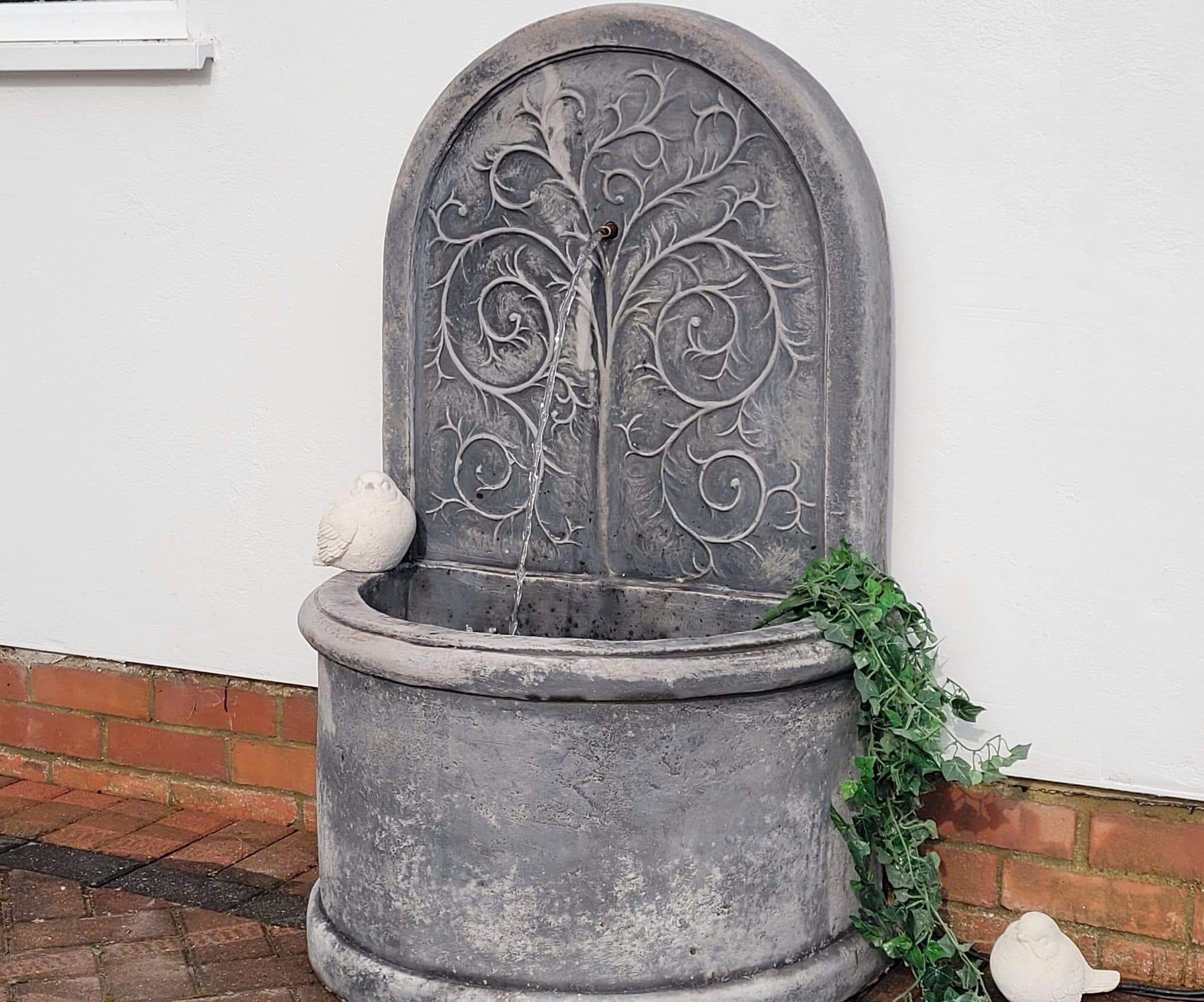
Wall Fountains for Courtyards and Small Gardens
When there's no floor space to give up, the water goes on the wall. What a wall fountain needs behind it, how to deal with sound in an enclosed courtyard, and the range from a small Tapas mask to a six-foot Niagara.