
Wall Fountains for Courtyards and Small Gardens
30 September 2026 · Geoffs Garden Ornaments · Buying Guides · wall fountains, small gardens, garden fountain
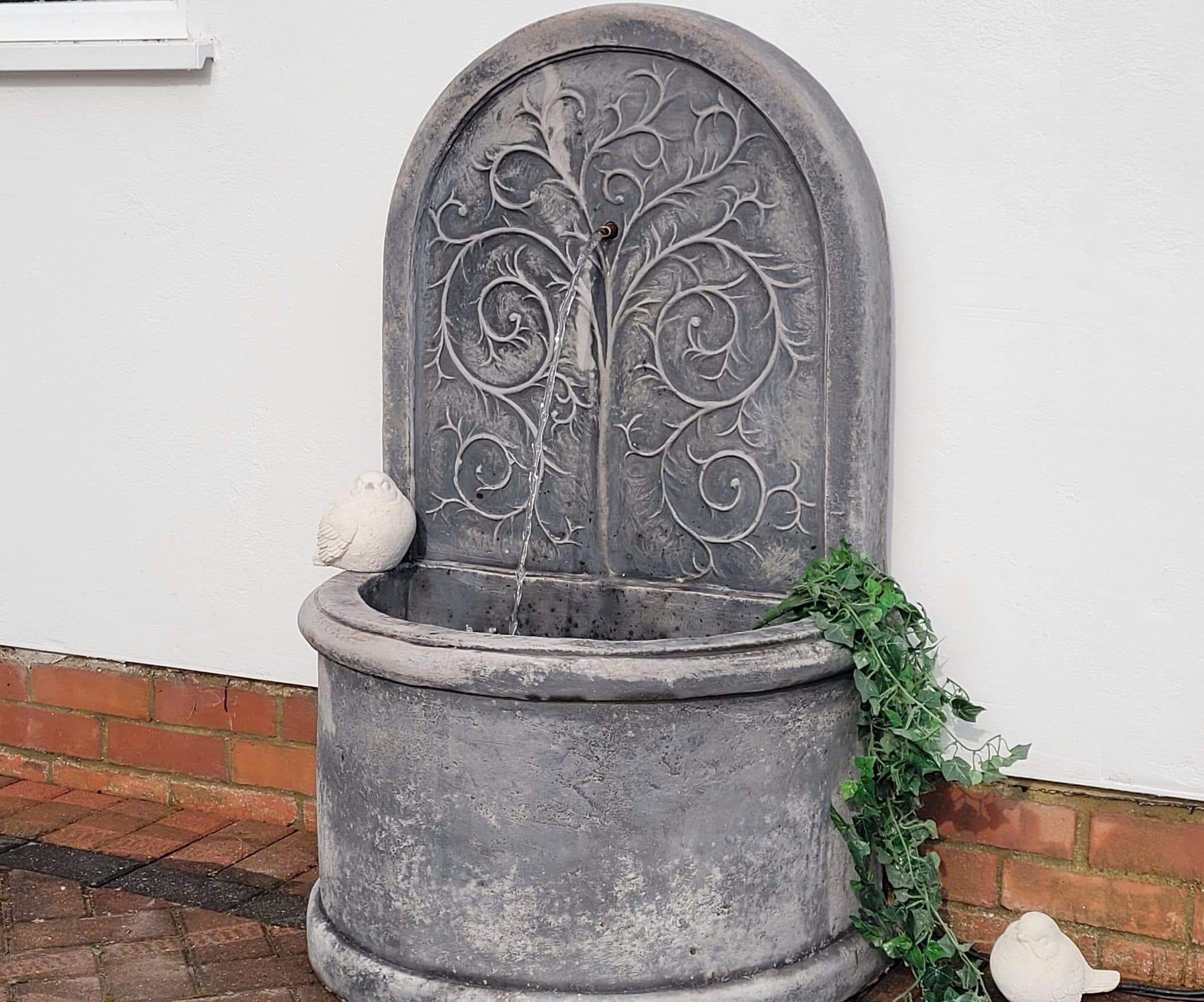
The commonest reason people give for not having a fountain is floor space. A courtyard behind a terraced house, a narrow side return, a small walled garden already full of pots — there's nowhere to put a metre-wide pool surround, and that's usually where the idea stops.
It needn't. A wall fountain gives you the sound and the movement using vertical space you weren't using anyway, and in an enclosed courtyard it's arguably the better answer: hard walls reflect the sound back at you, so a modest wall fountain in a small space is more present than a large free-standing one in an open garden.
What a wall fountain is, and what it needs
A wall fountain has two parts: a spout or mask fixed to the wall, and a basin or trough beneath it that catches the water. A pump in the basin sends the water back up a pipe to the spout, and it circulates. Some pieces combine the two into one unit; some are supplied as a mask to hang above a trough of your choosing.
Three questions to answer before you buy, in this order.
1. Will the wall carry it?
This is the one to be honest about. These are cast stone pieces and they are heavy — a large wall mask weighs a great deal more than it looks, and the basin full of water weighs more again.
- Solid masonry — brick or block — is what you want, with proper expanding or resin fixings suited to the load.
- A single-skin garden wall may or may not be up to a large piece. If in doubt, ask a builder rather than find out.
- Fence panels, timber, or a wall you can rock are not candidates. Fix a heavy piece to a fence and it will come off it, in time, probably in a gale.
- Take the weight of the basin on the ground where the design allows it, rather than hanging everything off the wall.
If the wall is in question, most wall fountains can be stood against it on a firm base instead, taking the load through the ground and using the fixings only to stop it toppling.
2. Where does the water live?
The basin is the reservoir, and a shallow one holds surprisingly little water. That has two consequences: it needs topping up more often in hot weather, and there's less margin before the pump is running dry. In a courtyard in July, check it weekly.
A larger trough beneath the spout solves both problems and gives you somewhere to plant the edge.
3. Where does the cable go?
The pump needs power, and a wall fountain puts that cable at eye level unless you plan for it. Run it behind the piece, into a conduit, or along a mortar course where it disappears. Anything mains-powered outdoors needs RCD protection and, in most cases, an electrician — there's more on this in our guide to lighting a water feature.
Sound: the thing people get wrong
An enclosed courtyard is a small, hard-surfaced room. Water that sounds gentle in an open garden can be loud in one — and a fountain you can hear through a closed bedroom window at midnight stops being charming quite quickly.
Two adjustments. First, the drop: the further the water falls before it lands, the louder it is, so a spout close above the water surface is quieter than one high up the wall. Second, the flow: a pump with an adjustable flow control lets you tune it, and most people end up running theirs lower than they first set it.
Put it on a timer and you can have it running through the afternoon and off overnight.
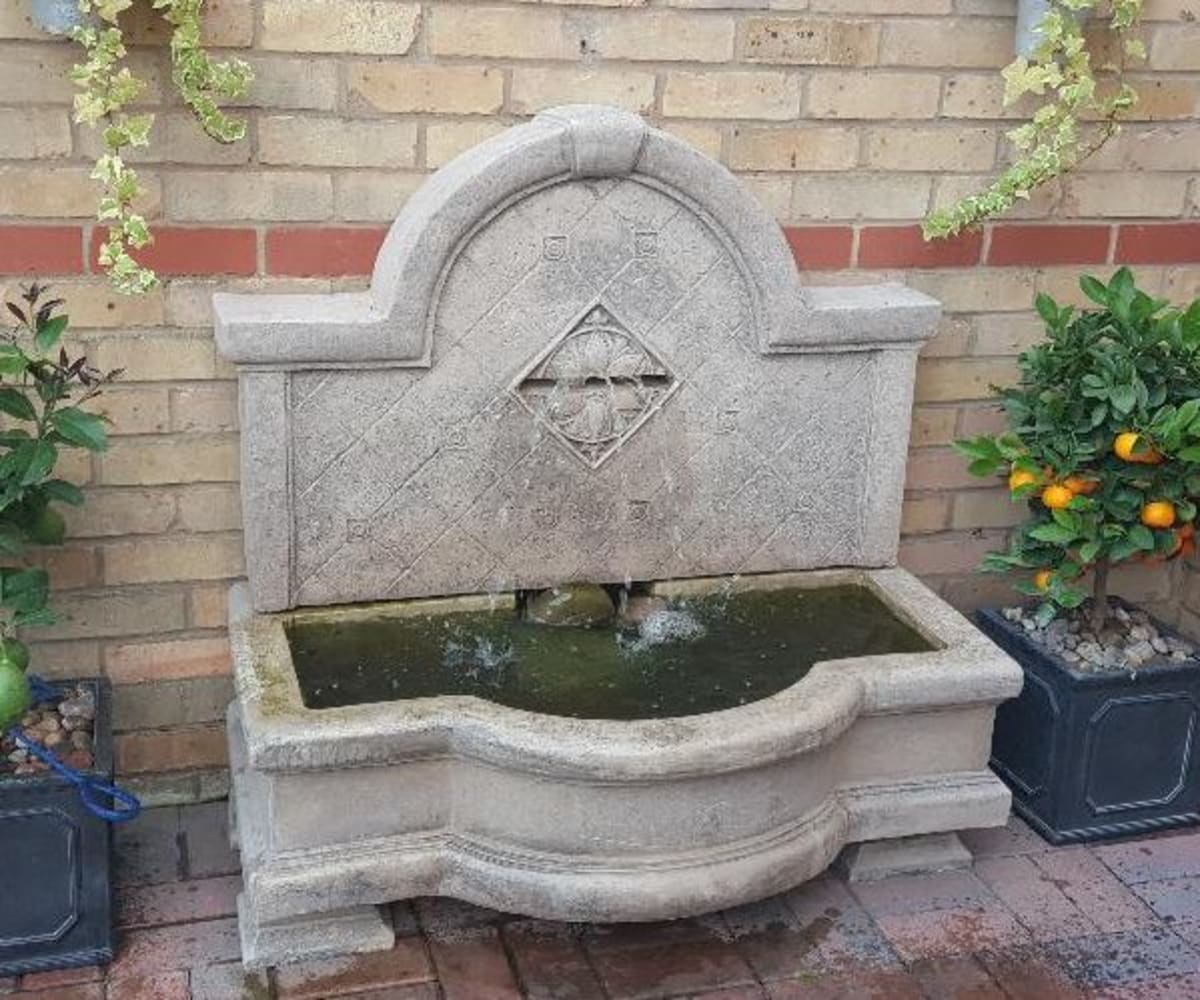
The range
- Tapas Wall Fountain — a compact piece for a small courtyard or a blank stretch of wall by a back door.
- Athena Wall Water Fountain — a classical mask, the traditional answer for a period garden or a walled kitchen garden.
- Highly Detailed Lions Wall Fountain — a lion mask, which is the oldest wall-fountain motif there is and still the one that suits a formal garden best.
- Niagara Falls Wall Fountain — at the other end entirely, a sheet-water piece six feet tall, available in two sizes. This is a garden wall turned into the feature, not an ornament on it.
There's also the large wall-hanging Buddha head if you want the presence on the wall without the plumbing, and our Victorian style fluted wall troughs for planting beneath one.
Setting it off
A wall fountain is at its best against something. Bare render is a weak background; brick, flint, a clipped hedge or a climber all give the piece something to sit in front of. Leave enough clear wall around it that it reads as an object rather than as part of a crowded wall, and keep climbing plants clear of the spout itself — ivy will find its way into a waterway given a season.
Low planting in front of the basin hides the pump cable and softens the join between the piece and the ground, which is usually the bit that looks unresolved.
If the wall really won't do
A self-contained fountain takes about the same footprint and needs nothing but a level base and a socket, and our small patio fountains under £200 are aimed at exactly this problem. Our post on self contained water features goes through the options.
Have a look at how other people have done it in our customer gallery — a good number of those photographs are small gardens. Prices include delivery to most mainland UK postcodes.
The product in this post
Related posts
30 September 2026
What Is a Sump Fountain? How Sump Water Features Work
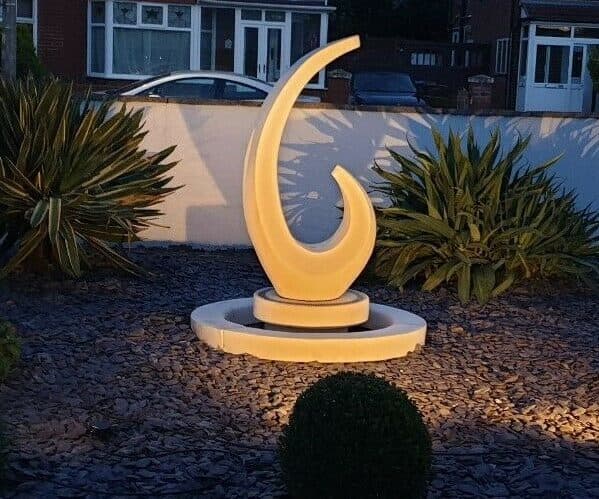
A sump fountain hides its reservoir below ground, so the sculpture appears to rise straight out of the paving with no pool around it. How they work, what installing one involves, and the six in our range.
30 September 2026
Lighting a Water Feature at Night: LED Rings, Underwater Lights and Spots
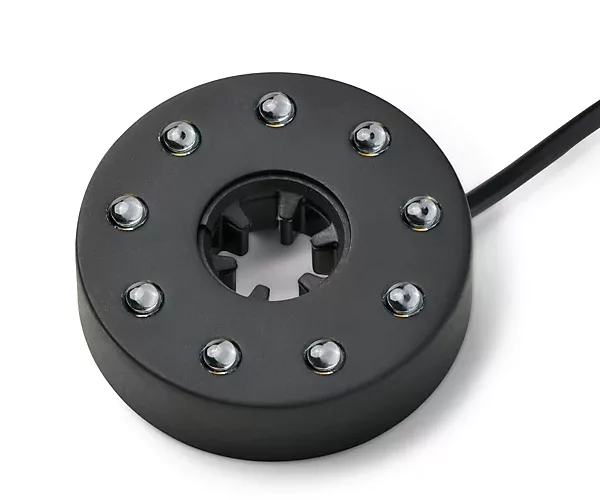
A lit fountain is a different thing after dark, and it doubles the hours you get out of it. The three kinds of light we supply, where each one goes, white versus colour changing, and getting the power there safely.
14 September 2026
Garden Urns on Plinths: Pairs, Proportions and Planting
Stone urns are one of the oldest devices in garden design. When to choose a pair or a single urn, how to match an urn to a plinth, where they look best, and what to plant in them through the year.