
Choosing a Stone Finish: What Each Option Actually Does Outdoors
18 October 2026 · Geoffs Garden Ornaments · Buying Guides
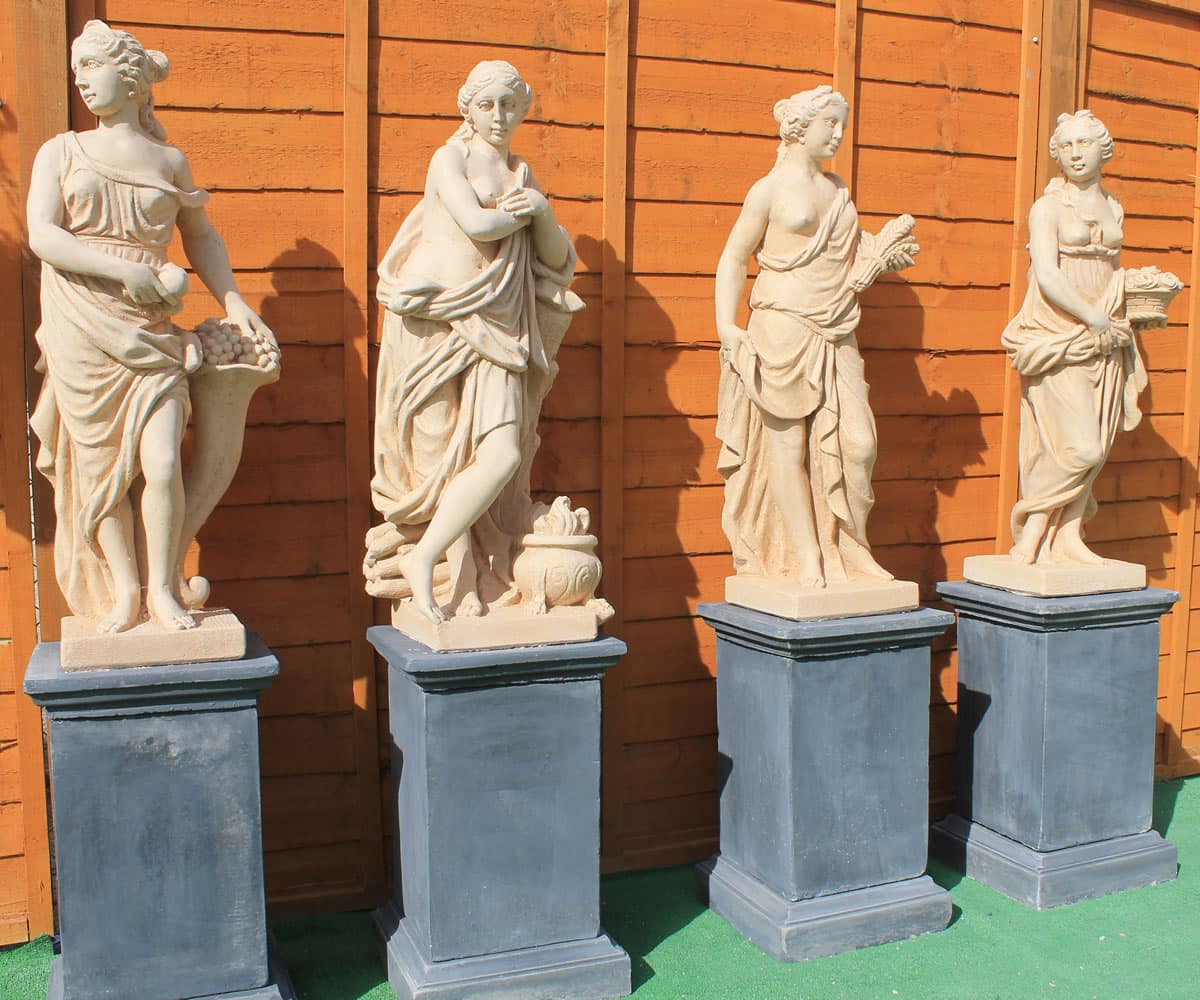
Choosing a finish is the decision customers change their minds about most, and it is usually because the options are described by name rather than by what they do once they are outside in the weather. The important division is not which colour you prefer. It is which finishes are the stone and which are applied on top of it.
The finishes that are the stone itself
Three of our finishes are simply the natural colour of the mix the piece is cast from. There is no coating to wear, nothing to reapply, and they weather the way stone weathers — slowly, and generally for the better.
- Classic Limestone. The natural colour of the limestone mix: a pale grey, close to the colour of a button mushroom. The default for good reason — pale stone throws shadow into carved detail, so ornate pieces show their modelling.
- White Limestone. The white limestone mix. A chalky white rather than a bright one, closer to white marble than to paint.
- Sandstone. The sandstone mix: a pale buff-yellow, very similar to bath stone. Warmer than either limestone, and the easiest match for yellow-toned brick and Cotswold-type walling.
One honest caveat for all three: because the colour comes from quarried material, it can vary slightly between production batches as quarries dig deeper. If you are buying a matched pair or adding to an existing set, say so when you order.
The applied finishes
- Antique Stone. A darker grey wash over Classic Limestone, intended to look aged. It is designed to fade naturally over time as weathering takes over, and because the colour underneath is stone rather than another paint, the transition is seamless rather than patchy. If you want a piece to look as though it has been there for years, this is the one.
- Moss Green. A painted finish on Classic Limestone that reads as naturally weathered — the green that collects on old stone in shade. Sits well in woodland and damp planting.
- Antique Rust. A painted finish giving a terracotta colour. Useful where you want the warmth of a clay pot in a piece that is actually stone.
- Bronze Paint Effect. A bronzed finish available across a wide range of products, using paints developed for both interior and exterior use. The obvious choice for contemporary and sculptural pieces, where you want metal rather than masonry.
- Black. Dulux Weathershield black masonry paint on limestone, sealed with a clear lacquer spray. Strong and architectural, particularly against render or pale gravel. It lasts around six to eight years and is then straightforward to reapply — worth knowing before you choose it for something you would rather never touch again.
Silver Grey Granite is a different thing entirely
This one is not a surface treatment at all. It is a construction mix — 4mm granite dust with 10mm granite chippings — so the colour and texture run right through the piece, giving the look and feel of hand-carved stone. It ages particularly well in a garden.
The practical consequence is weight: it is around 20% heavier than concrete. For anything of size, factor that into how you plan to move it from the pallet, which our guide to delivery day goes into.
Choosing between them
Our colour options page deliberately does not tell you which finish suits which garden, because that genuinely is a matter of taste. A few observations that hold up more often than not:
- Pale finishes show carved detail best; dark finishes show silhouette best. Pick according to which matters in the piece you are buying.
- Match the house, not the planting. Planting changes every season; the brick or render behind the piece does not.
- In deep shade, pale finishes stay visible and dark ones disappear.
- If the garden is already busy, the natural stone colours are the safest choice by a wide margin.
And if you are unsure, the Chichester showroom has examples of every finish side by side, which settles it faster than any photograph. You can also ask about a colour that is not listed against a particular product — it is often possible.
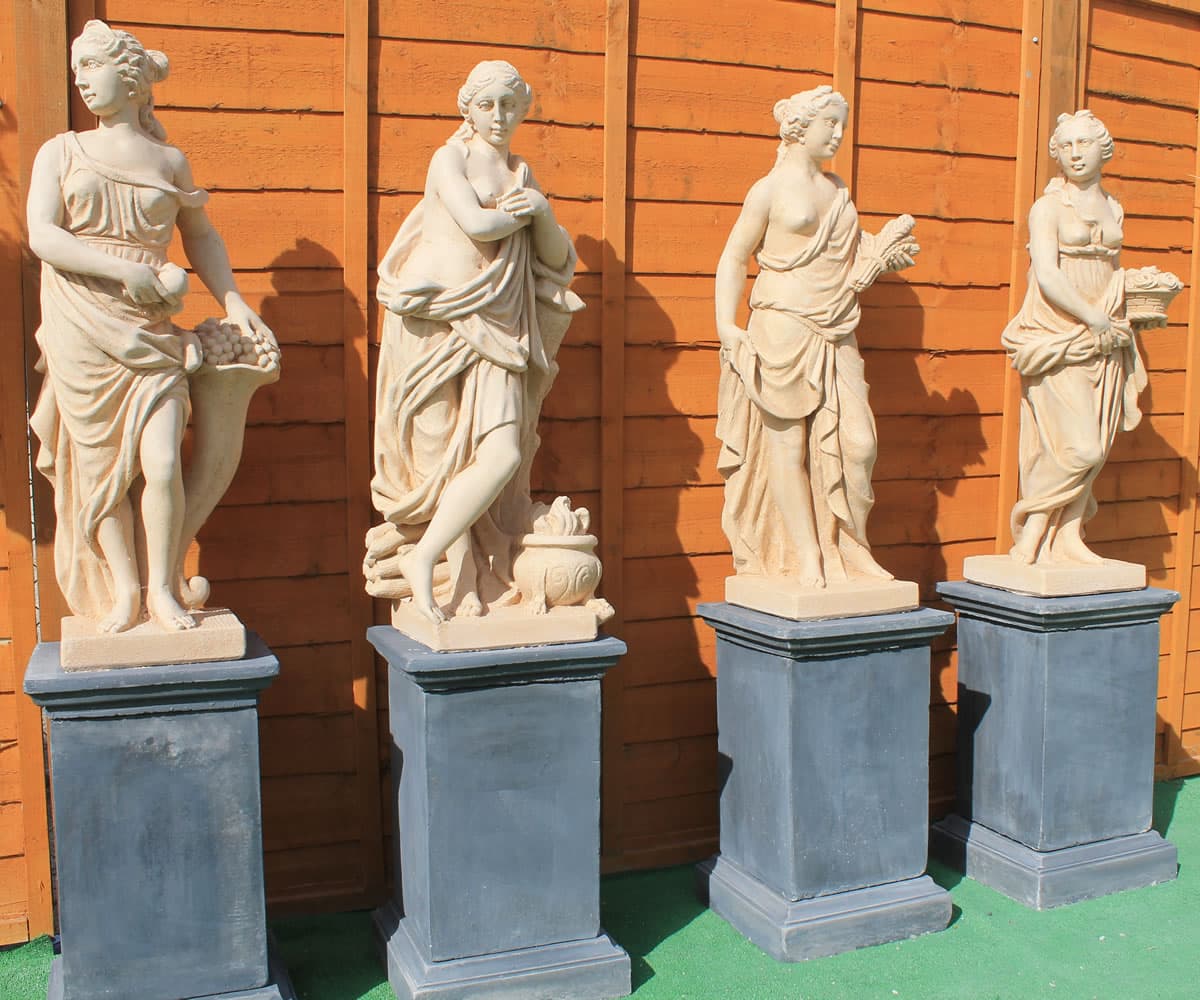
How the pieces are made, and what the mixes are, is set out on our materials and methods page. To see a finish on a classical piece, the four season statues are a good place to start.
The product in this post
Related posts
18 October 2026
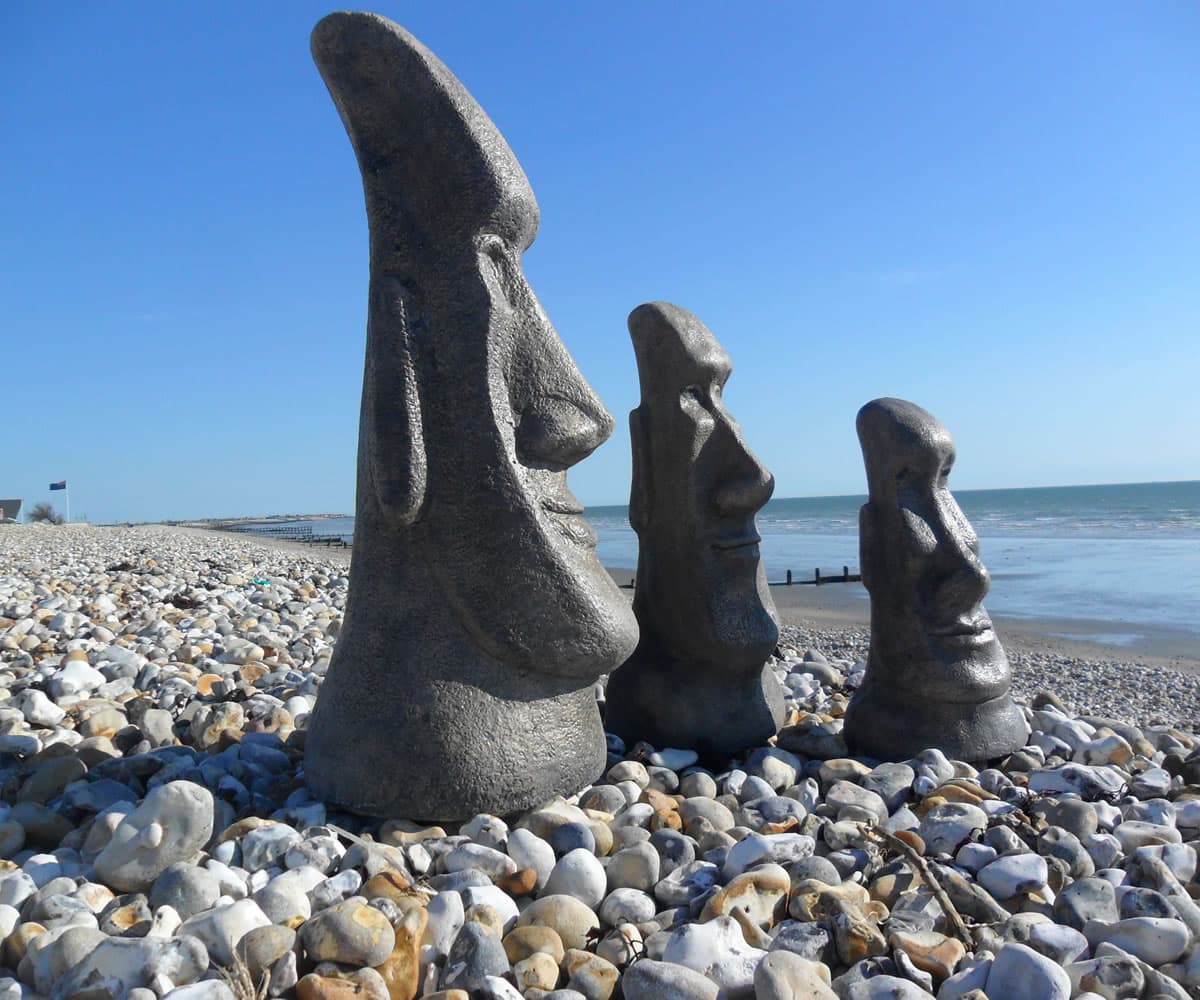
Easter Island Heads in a British Garden: Scale, Siting and Grouping
A moai-style head is one of the few garden ornaments that gets better the more plainly it is used. Bare stone, tall grasses and no company at all.
18 October 2026
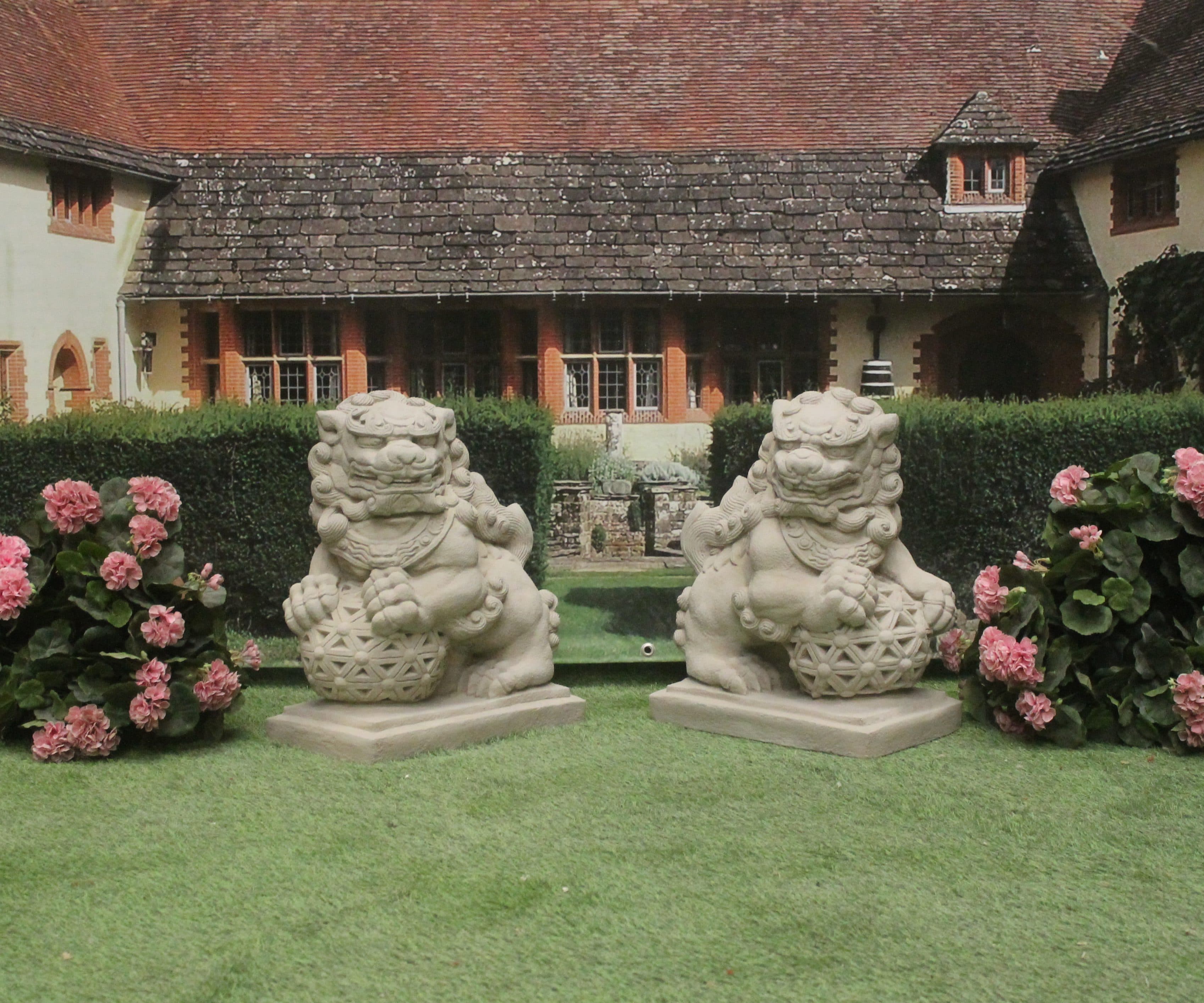
Chinese Foo Dogs and Stone Lions: Pairs, Placement and Which Way They Face
Guardian statues are one of the few garden ornaments with rules attached. Most of them are worth following, because a pair placed properly looks deliberate rather than decorative.
30 September 2026
What Is a Sump Fountain? How Sump Water Features Work
A sump fountain hides its reservoir below ground, so the sculpture appears to rise straight out of the paving with no pool around it. How they work, what installing one involves, and the six in our range.