
Chinese Foo Dogs and Stone Lions: Pairs, Placement and Which Way They Face
18 October 2026 · Geoffs Garden Ornaments · Buying Guides
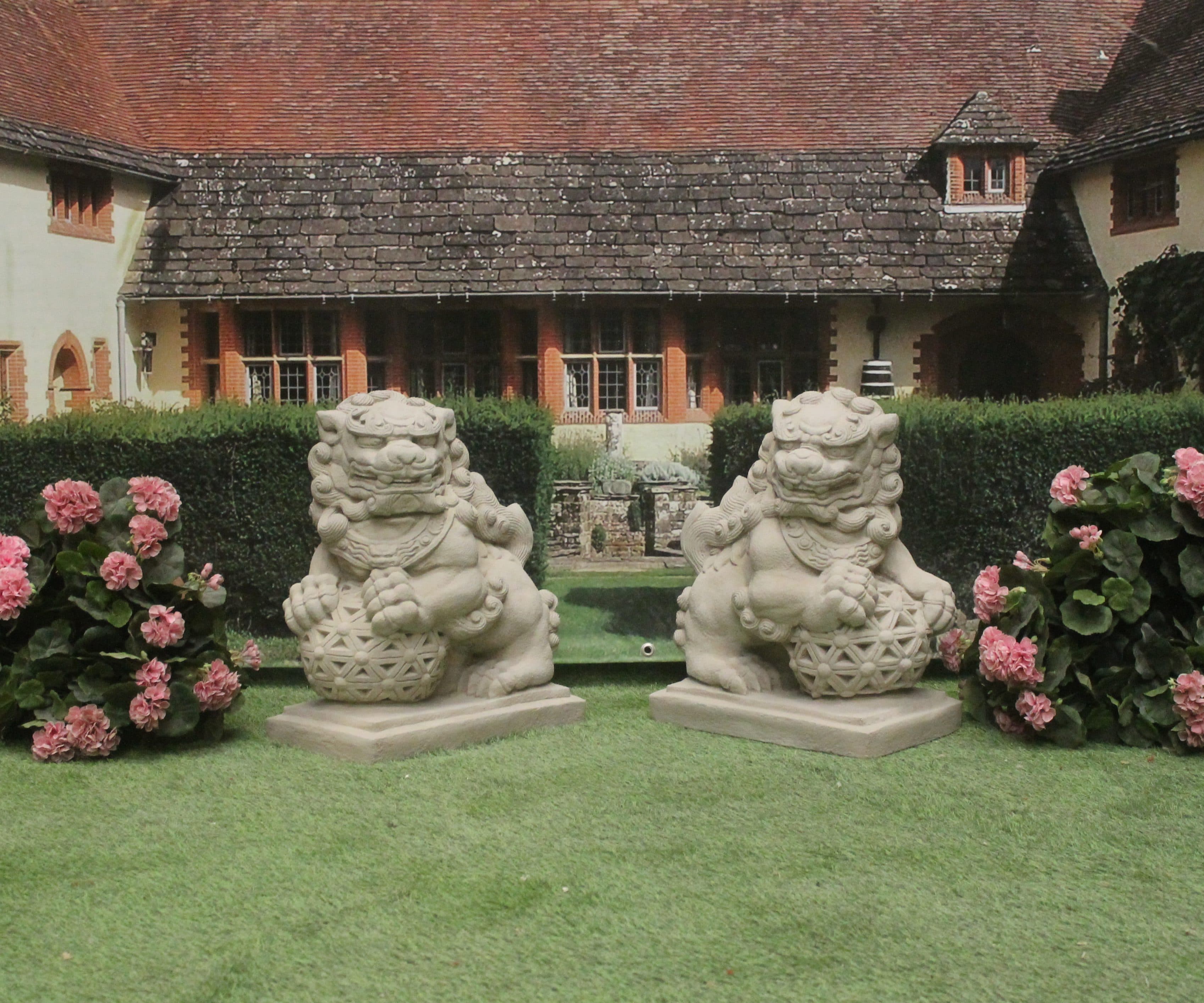
Guardian statues are one of the few kinds of garden ornament that come with rules attached. You do not have to follow them — nobody will inspect your gateposts — but they are worth knowing, because a pair placed according to the convention looks deliberate, and a pair placed at random tends to look like two statues that happened to end up near each other.
Foo dogs are lions, and they are not dogs
The figures sold as Chinese foo dogs are stylised lions, used in Chinese architecture for centuries to flank the entrance to a temple, a palace or a home. They are protective rather than ornamental in origin: the pair stands at the threshold, facing out, watching whoever approaches.
Traditionally they are not identical. One is the male, usually shown with a paw resting on a ball; the other is the female, with a cub. The pair is the point — the convention treats them as incomplete on their own.
Which one goes where
The usual arrangement is from the perspective of the statues themselves, looking out from the building. That puts the male on the left as the statues see it, which is the right-hand side as you approach. The female takes the other side. If you have a pair that are mirror images rather than distinct figures, the thing to get right is simpler: they should face outwards and slightly towards each other, not straight ahead in parallel.
European stone lions follow a different habit
The sitting or couchant lions of English and Italian gardens come from a separate tradition — heraldic rather than spiritual — and the convention there is about symmetry rather than gender. They flank steps, gateways and terrace ends in matched pairs, and they are usually raised on plinths or pier caps so the head sits near eye level as you pass.
The practical difference is height. A foo dog on the ground beside a door reads correctly because that is where the tradition puts it. A heraldic lion on the ground beside a wide gravel drive often looks lost, because it was designed to be seen on something.
Placement that works
- Flank something. A threshold, steps, a gateway, the end of a terrace, the entrance to a path. Guardian figures need a thing to guard; placed in open lawn they lose their job.
- Match the gap to the pieces. A pair set too far apart stops reading as a pair. As a rough guide, keep the distance between them no more than three or four times the width of a single piece.
- Give them a base. Stone sitting directly on soil or grass sinks, stains and gets strimmer damage. A slab, a pier cap or a plinth keeps the piece level, clean and at the height it was drawn for.
- Think about the approach. Stand where visitors actually arrive from and check the pair from there, not from the house.
- Keep them symmetrical. Where the tradition is heraldic, symmetry is the entire effect. One lion six inches higher than the other is the detail everyone notices and nobody can name.
Single figures
A single guardian is a perfectly reasonable choice if you have one side to work with — the corner of a terrace, one side of a flight of steps against a wall, a niche. It simply reads differently: as a sculpture rather than as a gateway. If the position is genuinely one-sided, a single piece looks considered. If it is a symmetrical gateway with one statue on it, it looks like a pair with one missing.
Finish and weathering
Guardian figures carry a lot of surface detail — manes, teeth, claws, scrollwork — and the finish you choose changes how much of it you see. A pale finish such as Classic Limestone throws shadow into the carving and shows it off; darker washes like Antique Stone settle into the recesses and give an aged look where the detail reads more softly. The full range is set out on our colour options page, and the Chichester showroom has examples of every finish if you would rather judge in person.
All our pieces are cast in reconstituted stone from UK quarries and are frost proof, so a pair can stay out year round. The one thing to watch is any piece that holds water in a recess — ice expanding in a hollow can crack stone, and ice damage is not covered, so tip out standing water before a freeze.
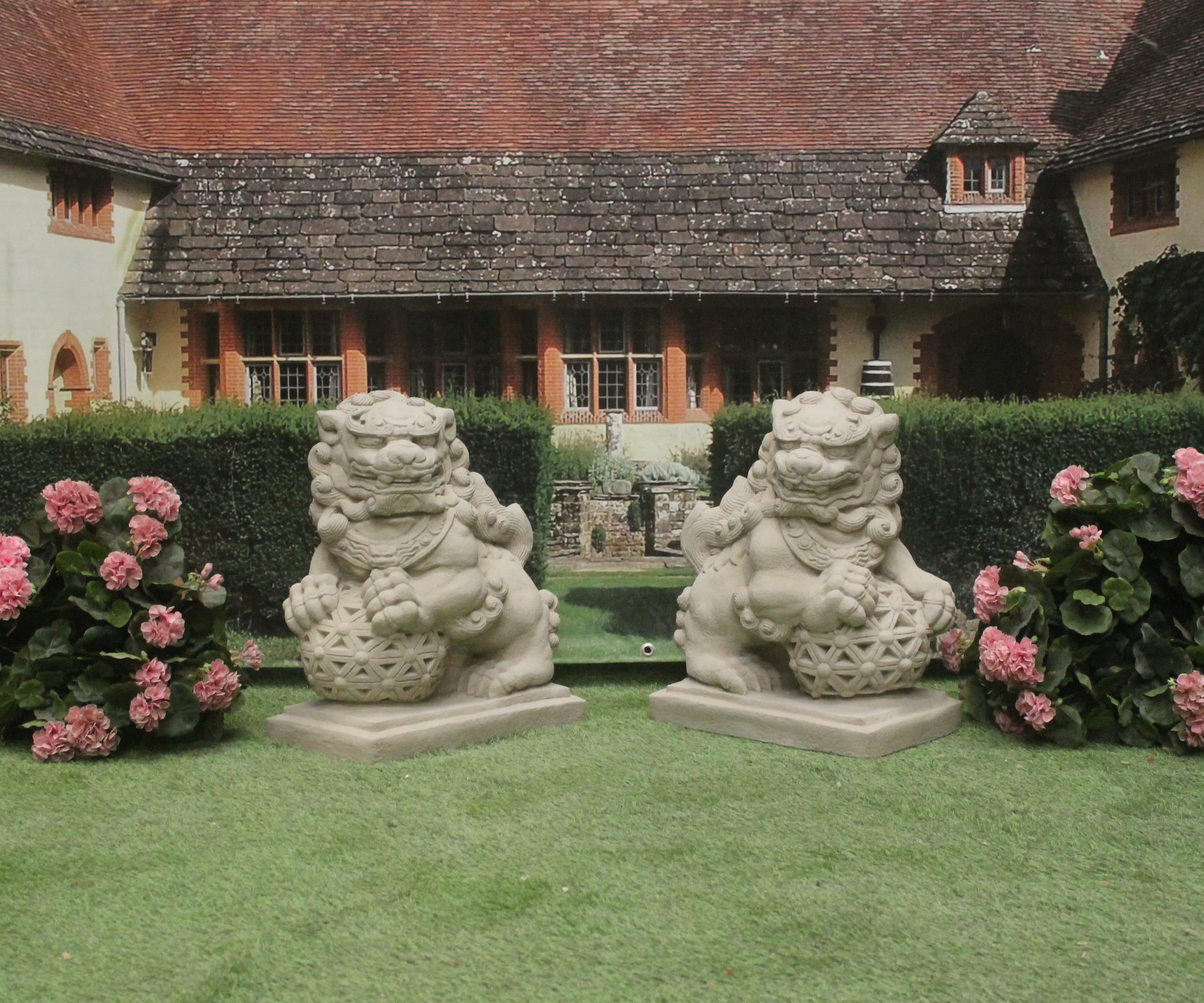
You can see the pair of large Chinese foo dogs and the rest of the range on the lions and guardian figures page. If you are placing a pair on a gateway and want to talk through size, call 01243 532 390 — it is an easier conversation than it looks in writing.
The product in this post
Related posts
18 October 2026
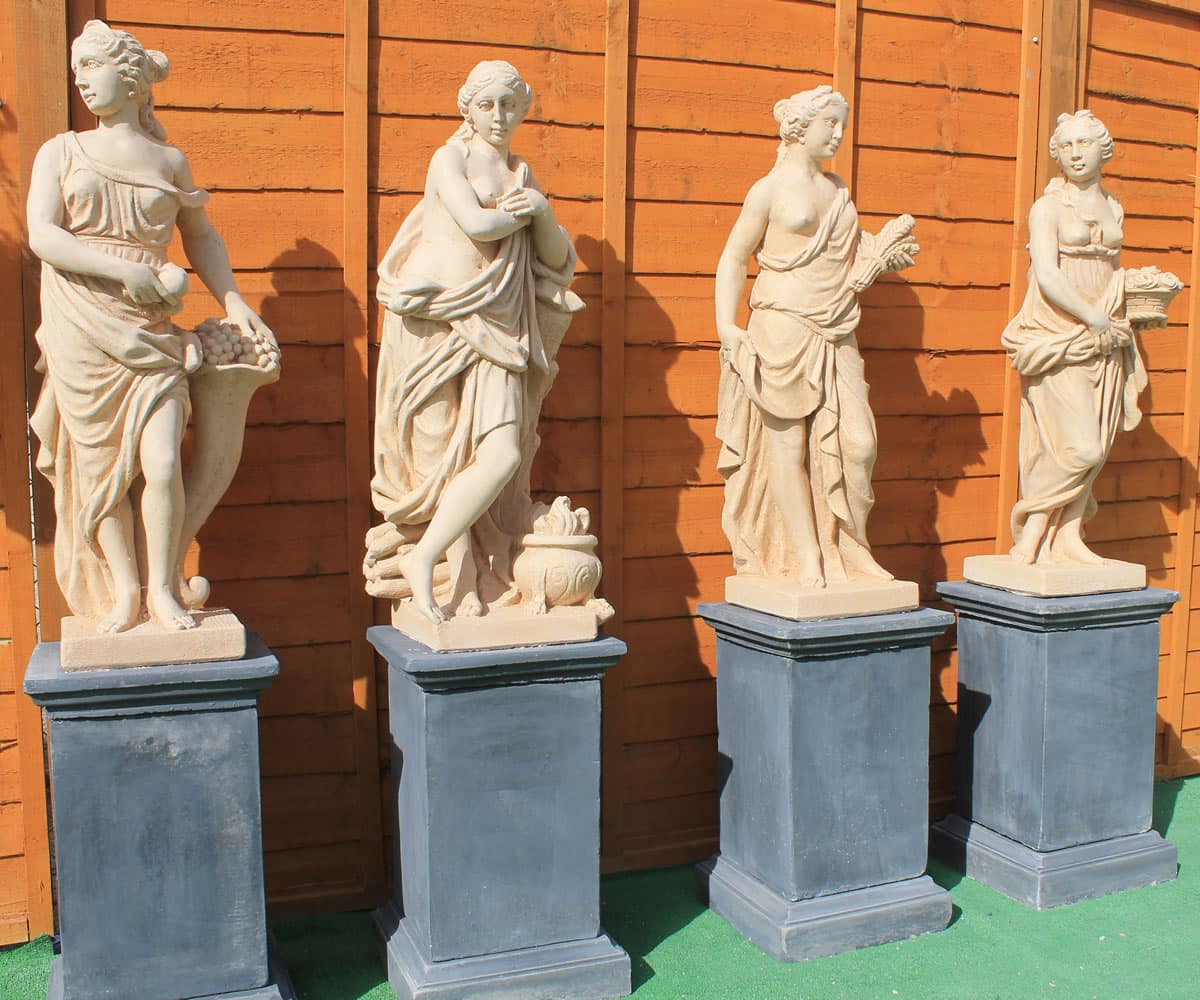
Choosing a Stone Finish: What Each Option Actually Does Outdoors
Some of our finishes are the natural colour of the stone mix and never need anything doing. Others are paint, and one of those has a lifespan worth knowing about.
18 October 2026
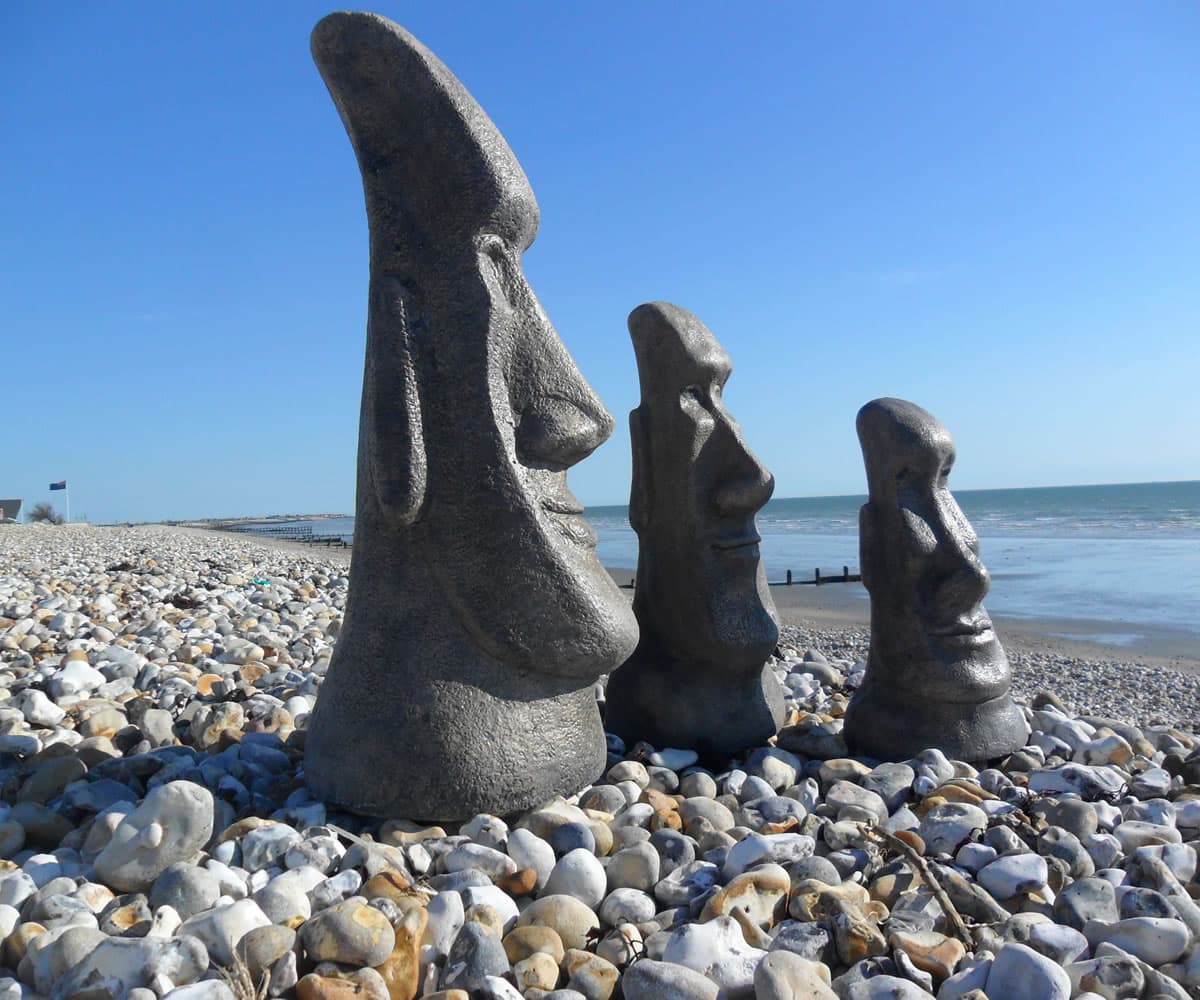
Easter Island Heads in a British Garden: Scale, Siting and Grouping
A moai-style head is one of the few garden ornaments that gets better the more plainly it is used. Bare stone, tall grasses and no company at all.
30 September 2026
What Is a Sump Fountain? How Sump Water Features Work
A sump fountain hides its reservoir below ground, so the sculpture appears to rise straight out of the paving with no pool around it. How they work, what installing one involves, and the six in our range.