
Winter Care for Stone Fountains: Frost, Pumps and the Autumn Jobs Worth Doing
30 September 2026 · Geoffs Garden Ornaments · Care & Maintenance · winter care, fountain maintenance, stone garden fountain

Autumn is the one time of year a fountain asks something of you. The rest of the time it runs, you top it up, and that's that. Get the next few weeks right and it will come through the winter exactly as it went into it.
The short version: the stone is fine, the water isn't. Everything below follows from that one fact.
The stone is frost proof. The water is the problem
Our pieces are cast stone, made to stand outside through a British winter, and they do. You don't need to bring a fountain indoors, and you don't need to wrap it up.
What causes damage is water sitting in the bowls when the temperature drops. Water expands as it freezes, by roughly a tenth of its volume, and it expands in whatever direction it can find. In a bowl with no give in it, that force goes into the stone. A bowl left brim-full through a hard freeze is the single most common way a fountain that has stood happily for fifteen years gets cracked.
So the whole job is getting the water out, and keeping it out.
The autumn jobs, in order
- Pick your moment. Any dry day from mid-October onwards. Don't wait for the forecast to mention frost — the first one usually arrives before it's mentioned.
- Switch off at the mains before you put your hands anywhere near the water. Not at a timer, at the socket.
- Lift the pump out and set it aside. It gets its own section below.
- Empty every bowl and the reservoir. Bail, siphon or tip, depending on the piece. Sponge out the last inch — that's the bit that freezes first and it's the bit most people leave.
- Clear the leaves. Wet leaves left in a bowl over winter rot down into a sludge that stains the stone and blocks the outlet in spring.
- Check the outlet holes are clear so any rain that falls in runs straight out again rather than collecting.
That's it. There is no step six.
Should you cover it?
You can, and a breathable cover keeps the leaves out, which saves you a job. But a cover is not what protects the stone — draining is. A sheet of plastic over a bowl still full of water protects nothing at all, and if it holds rainwater against the stone it has made things slightly worse.
If you do cover a fountain, use something that breathes and tie it so it can't flap loose and abrade the surface in a gale.

Looking after the pump
The pump is the part that genuinely minds the cold, and it's cheap insurance to treat it properly.
- Take it out rather than leaving it sitting in an empty bowl. A pump with water still inside it can be split by ice just as a bowl can.
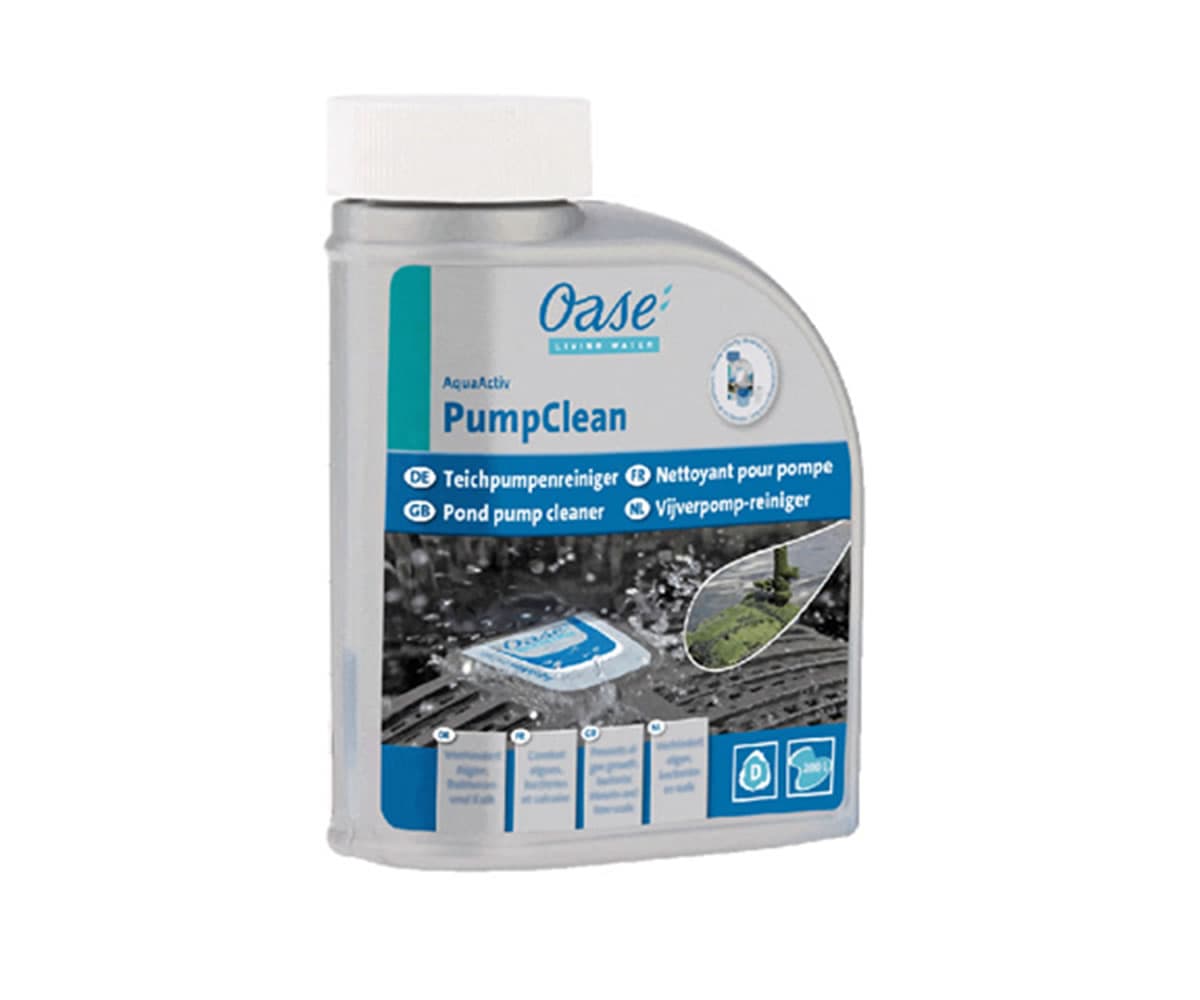
- Clean it before it goes away. Rinse the housing, open the cover, and clear the impeller of grit and hair. A pump put away dirty is a pump that struggles to start in April.
- Store it somewhere frost free — a shed is usually fine, a garage better.
- Keep it in a bucket of water if you want to be thorough. The seals in a submersible pump are designed to sit wet, and a winter spent bone dry can harden them.
If the impeller is furred up with limescale or the housing has been ignored for a few seasons, we offer a pump cleaning service rather than you having to replace a pump that's basically sound.
If you'd rather keep it running
Some people don't want to lose the sound and the movement for five months, and a fountain running through a mild spell is a fine thing. It can be done, with two conditions.
- It has to run continuously. Moving water is far more resistant to freezing than still water. A fountain switched off overnight in December is worse off than one drained in October.
- You have to be willing to shut it down properly at short notice. When a genuine cold snap is forecast, that means switching off, lifting the pump and draining — in the evening, not the following afternoon.
Half-measures are what cause damage. Running is fine, drained is fine, and a full bowl with the pump off is the one state to avoid.
Birds still need water
Draining the fountain takes away a water source at the time of year birds most need one. A bird bath emptied each evening and refilled with fresh water each morning covers it, and takes a minute. There's more on this in our guide to stone bird baths — including why salt and antifreeze must never go anywhere near one.
Starting again in spring
Around late March, once the risk of a hard frost has passed:
- Brush out the dry bowls before you fill them. Whatever blew in over winter is easier to remove dry than wet.
- Refit the pump, check the outlet is clear, and fill with fresh water.
- Run it for a few minutes and watch the flow. A weak jet almost always means a blocked inlet, not a failed pump.
- Give any green patches a scrub with a stiff brush and plain water. Algae is cosmetic and comes off.
A little weathering is not a fault, incidentally. Cast stone is meant to soften and mellow outdoors, and most people prefer it after a few winters to the day it arrived. There's more about how our pieces are made and how they age on our materials and methods page.
Browse our garden fountains, or see the pumps, liners and lights we supply. Prices include delivery to most mainland UK postcodes.
The product in this post
Related posts

30 September 2026
Garden Fountain Pumps: Flow Rates, Running Costs and Keeping One Clean
What LPH actually means, how to work out what a fountain costs you to run, why a pump usually stops for a reason that isn't the pump, and the ten-minute clean that prevents most call-outs.

30 September 2026
What Is a Sump Fountain? How Sump Water Features Work
A sump fountain hides its reservoir below ground, so the sculpture appears to rise straight out of the paving with no pool around it. How they work, what installing one involves, and the six in our range.
30 September 2026
Lighting a Water Feature at Night: LED Rings, Underwater Lights and Spots
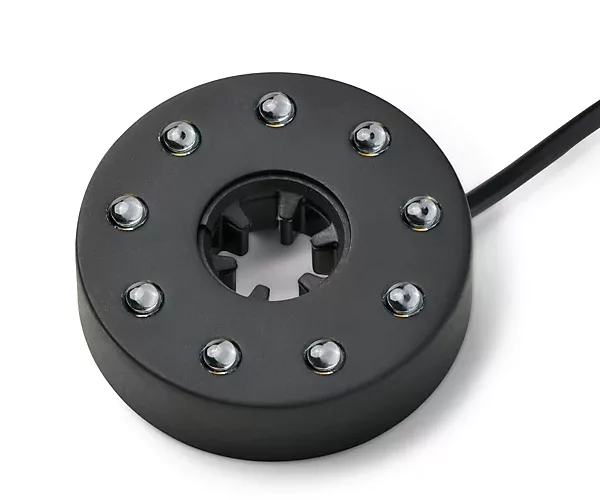
A lit fountain is a different thing after dark, and it doubles the hours you get out of it. The three kinds of light we supply, where each one goes, white versus colour changing, and getting the power there safely.