
Large Garden Ornaments: How to Choose the Right Size, Spot and Base
14 September 2026 · Geoffs Garden Ornaments · Buying Guides · garden design, large garden ornaments, stone garden ornaments
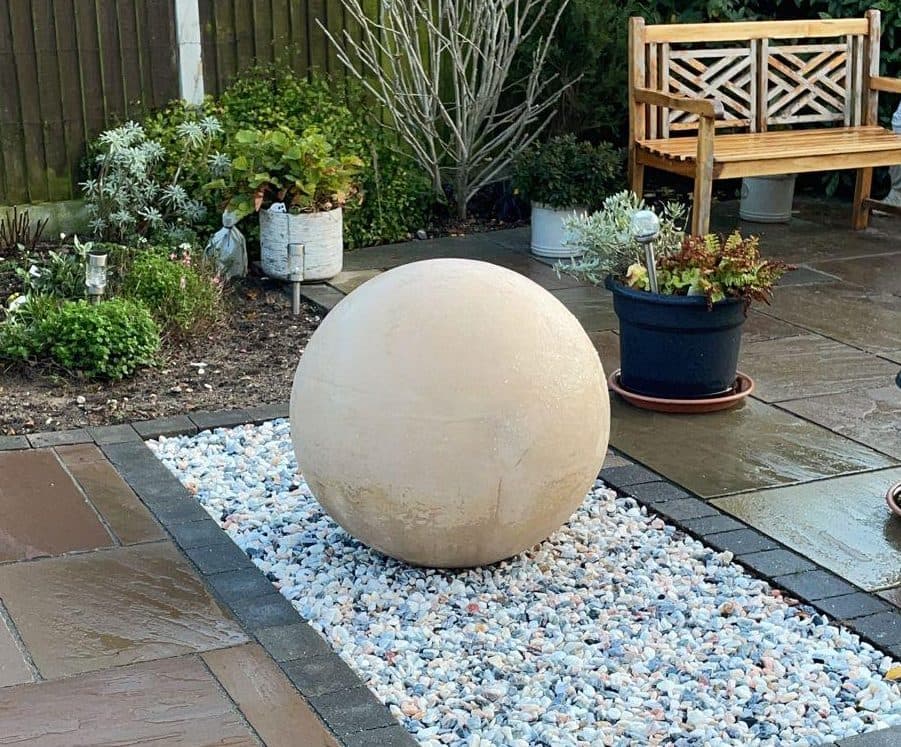
The most common regret with a garden ornament isn't the style or the colour. It's the size. A piece that looked generous in a photo ends up lost at the far end of a lawn, and the garden looks no different from before.
Large ornaments fix that, but only if they're in the right place and on the right base. This guide covers how to judge scale, where a big piece works hardest, what it needs underneath, and what to expect on delivery day.
Judge the size from where you'll see it
An ornament is seen from somewhere: the kitchen window, the patio, a bench. Work out that spot first, because the right size depends on how far away it is.
A useful rule of thumb: your usual viewing point should be roughly two to three times the ornament's height away. Sitting three metres from it, something around a metre tall (including any plinth) holds its own. A 40cm figure at the end of a 15-metre garden simply won't register.
Before you order, mock it up. A cardboard box, a stack of plant pots or a bin bag over a cane at roughly the right height, left in place for a day or two, will tell you more than any measurement. If you find yourself thinking it looks a bit big, it's usually about right. Outdoors, everything reads smaller than it does indoors.
Where a large ornament earns its place
- At the end of a view. The end of a path, lawn or pergola is the classic spot. A single strong shape, such as a Large Easter Island Head or a stone arch, gives the eye somewhere to land.
- Either side of an entrance. Pairs frame a front door, a gateway, a flight of steps or a gap in a hedge. Foo dogs and lions are the traditional guardians; urns on plinths do the same job more quietly.
- In a border. Stone gives a border structure in winter, when the planting has died back. A large ball sphere or a set of three works well among grasses and low shrubs.
- At a turn. A piece glimpsed round a corner draws people further into the garden.
- Near seating. Something worth looking at from where you actually sit, such as a Buddha, a figure or the four seasons statues.
Odd numbers look natural, pairs look formal. Three spheres grouped at different distances feel relaxed; two identical urns either side of a door feel deliberate. Decide which effect you want before you buy.
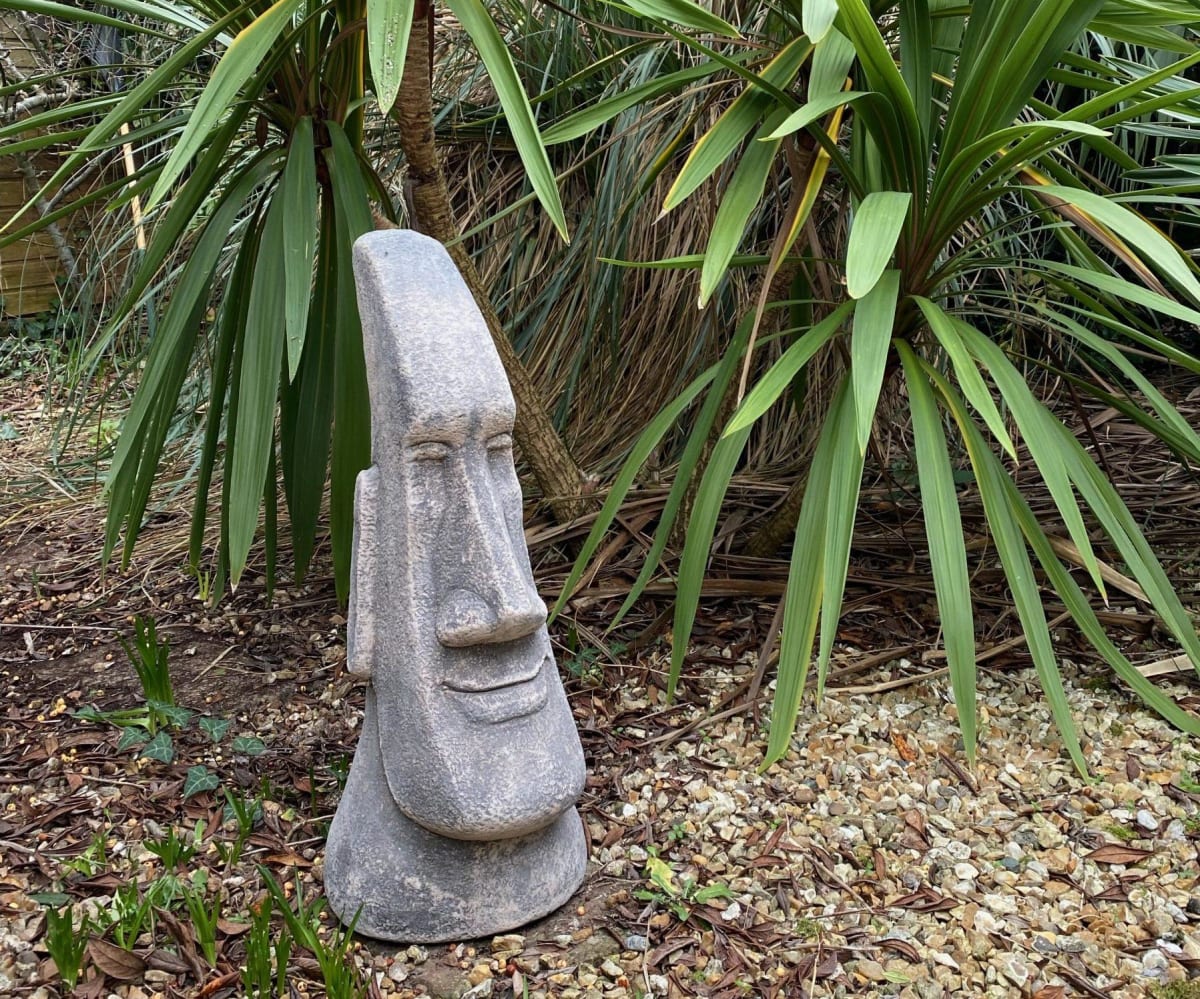
Lift it with a plinth
A plinth does two things. It raises the ornament clear of planting and lawn edges, and it brings it closer to eye level, which makes it look larger and more considered. Many of our statues, urns and Buddhas come with a matched plinth option, and you can also choose one separately from our plinths range.
What it needs underneath
Reconstituted stone is heavy, and a heavy piece on soft ground will slowly sink and lean. Give it a firm, level base:
- On a patio: check the slabs are sound and level with a spirit level before you position the piece.
- On a lawn or in a border: set a paving slab (or several, for a wide piece) on a compacted, level base, then place the ornament on top.
- On gravel: scrape the gravel back and put a slab down first. Gravel alone moves.
- On a balcony or roof terrace: check with a structural engineer before placing anything heavy.
Choosing a finish
Our natural finishes, Classic Limestone, White Limestone and Sandstone, are simply the colour of the stone mix. They weather gradually and pick up lichen and moss over time, which most people come to like.
The painted finishes change the look from day one. Antique Stone is a darker wash over Classic Limestone that fades naturally as weathering takes over. Moss Green and Antique Rust give an aged or terracotta effect, and there's also a Bronze paint effect and a Black finish (the black lasts around six to eight years and is straightforward to reapply). See all of them on our colour options page.
Because we work with natural stone, shades can vary slightly from one quarry load to the next. Everything in a single order is made together, so a pair or a set will always match.
How a heavy ornament arrives
This is the part people don't think about until the lorry turns up, so it's worth reading before you order:
- Deliveries come on a pallet, on a 7.5 tonne lorry (roughly the size of a dust cart). If a dust cart can't get down your road, the lorry can't either.
- The driver uses a pallet truck to bring the pallet onto your property. It can't be pulled over gravel, soft ground or steps.
- From there, moving the piece into position is down to you, so have a helper or two ready, and plan the route beforehand.
- Sign for the delivery as "unchecked", look the pallet over before unwrapping, and never roll an item off the pallet.
Prices include delivery to most mainland UK postcodes. The delivery page lists the exceptions and explains the process in full.
Built to stay outside
Our ornaments are cast in reconstituted stone from UK quarries, using a wet cast method and hand-finished before dispatch. You can read how our pieces are made. They're frost proof and can stay in the garden all year.
If you'd like to see real pieces before deciding, our showroom in Chichester, West Sussex holds a large cross-section of the range, and our customer gallery shows ornaments in customers' own gardens. Browse the full garden ornaments range, or call 01243 532 390 for advice on size.
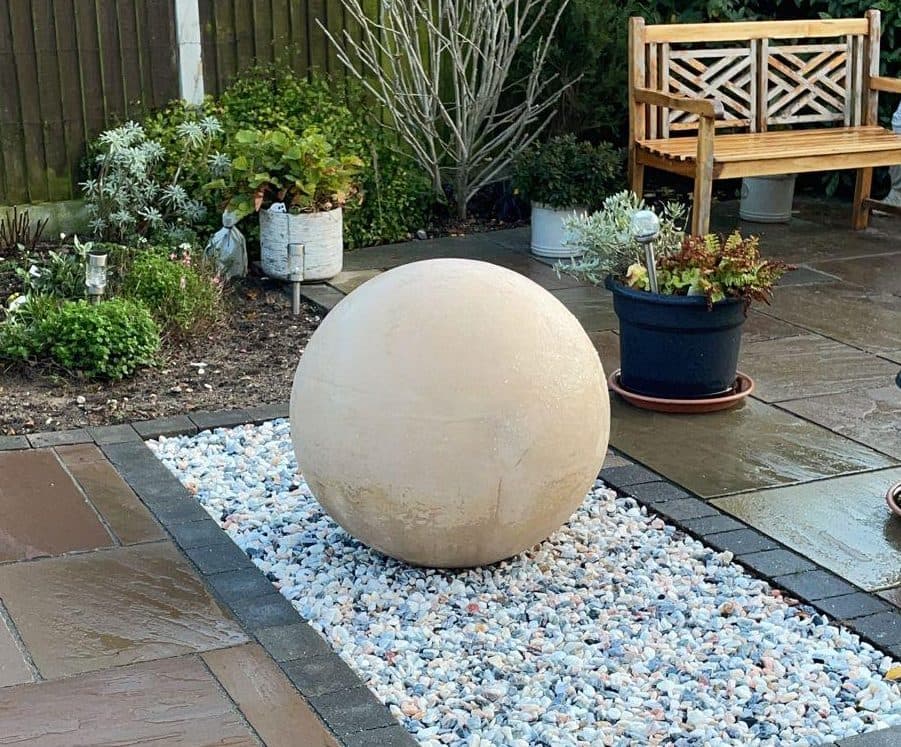
The product in this post
Related posts
14 September 2026
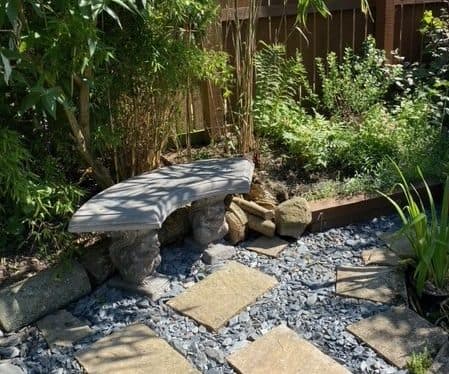
Stone Garden Benches: Curved or Straight, Small or Large?
A stone bench is part seat, part ornament, and it stays put all year. Where curved and straight benches work best, how to fit a small bench into a narrow space, the base it needs, and how to make it comfortable.
14 September 2026
Garden Urns on Plinths: Pairs, Proportions and Planting
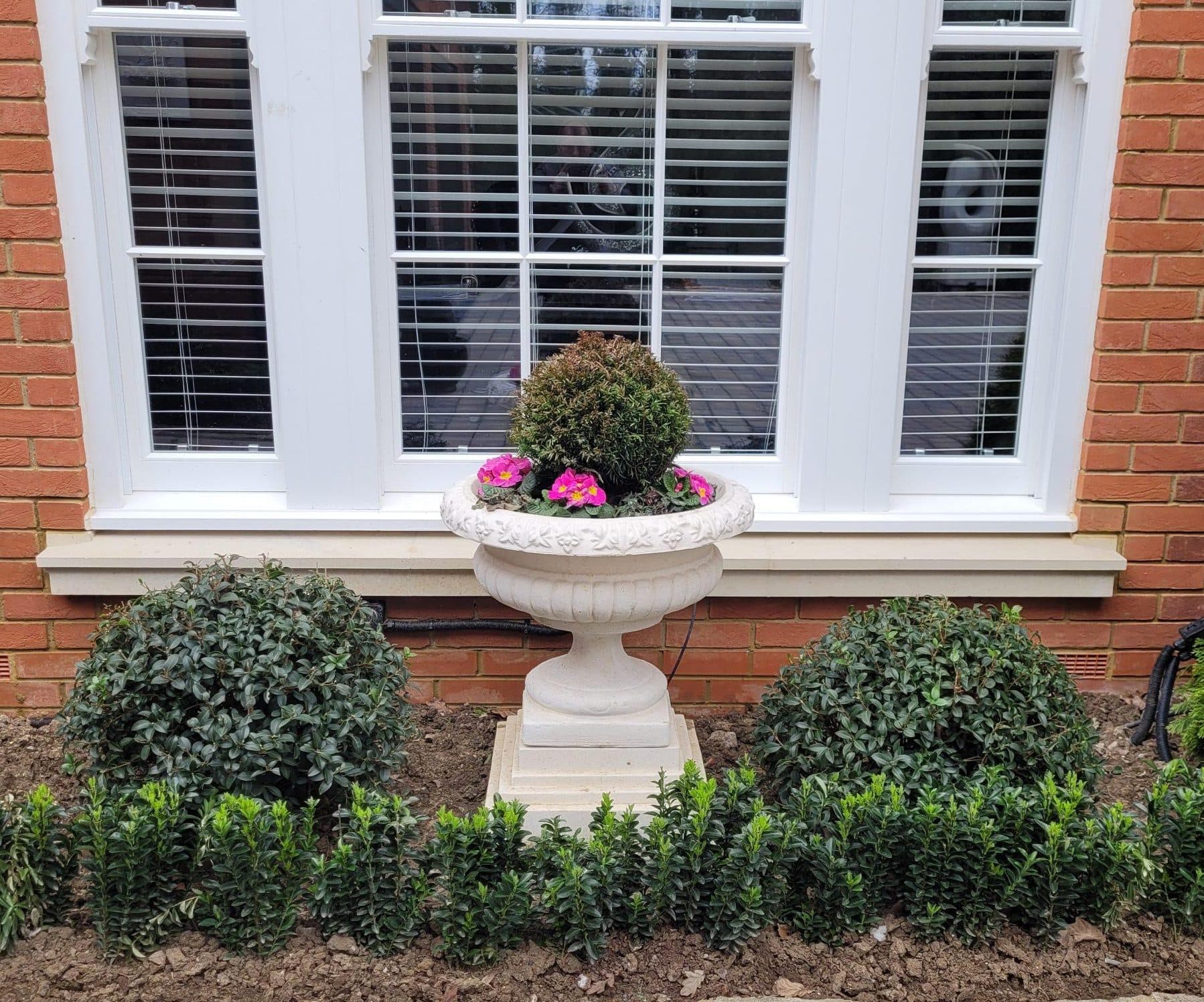
Stone urns are one of the oldest devices in garden design. When to choose a pair or a single urn, how to match an urn to a plinth, where they look best, and what to plant in them through the year.
14 September 2026
Stone Bird Baths: Where to Put One and How to Look After It
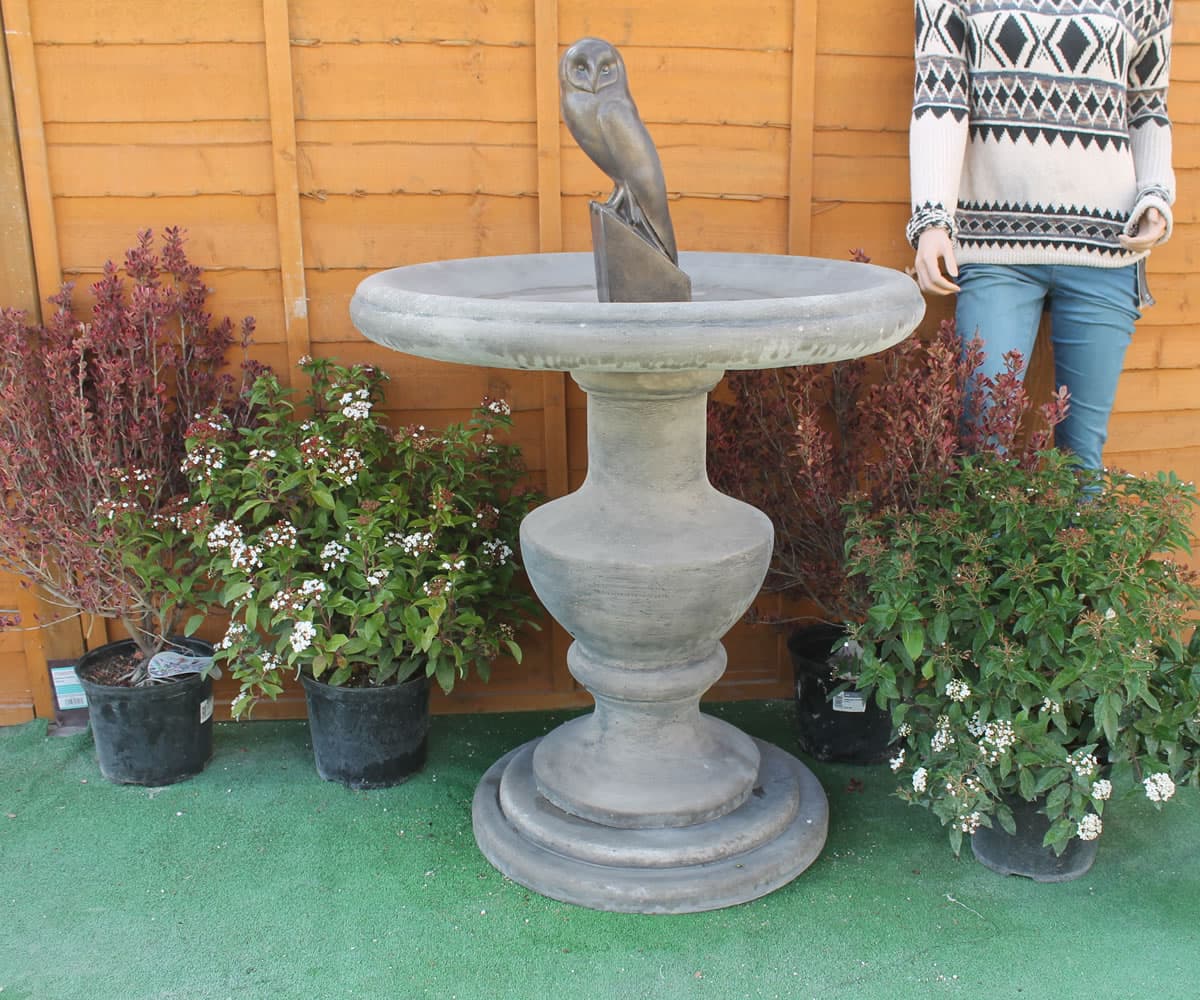
Birds need clean water all year, and a stone bird bath gives them somewhere safe to drink and bathe. The best position, how deep the water should be, how to keep it clean, and what to do when it freezes.