
Large Stone Garden Planters: Choosing Tubs, Troughs and Olive Tree Pots
14 September 2026 · Geoffs Garden Ornaments · Buying Guides · garden planters, olive tree pots, troughs and tubs
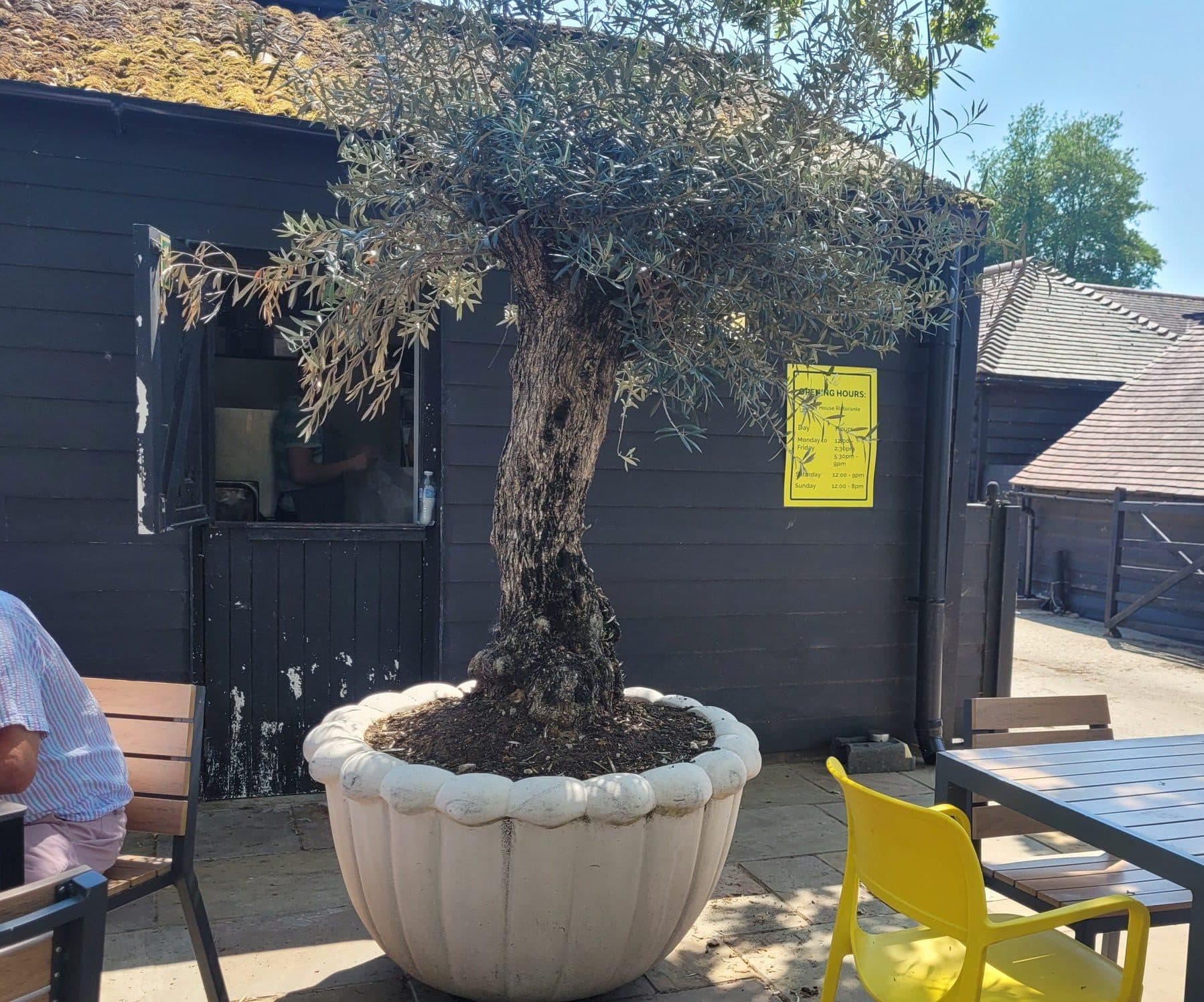
A large planter does more than hold a plant. On a patio or terrace it's often the main piece of structure, and the right one will outlast several changes of planting.
Stone has real advantages at this size. Its weight keeps a tall olive or bay steady in the wind, where a lighter pot would tip. Thick walls also buffer roots from sudden swings in temperature better than thin plastic. The trade-off is that a big stone planter is heavy, and it needs to go in the right place before it's filled.
Tubs, troughs or a cluster?
Round tubs and bowls: one strong plant
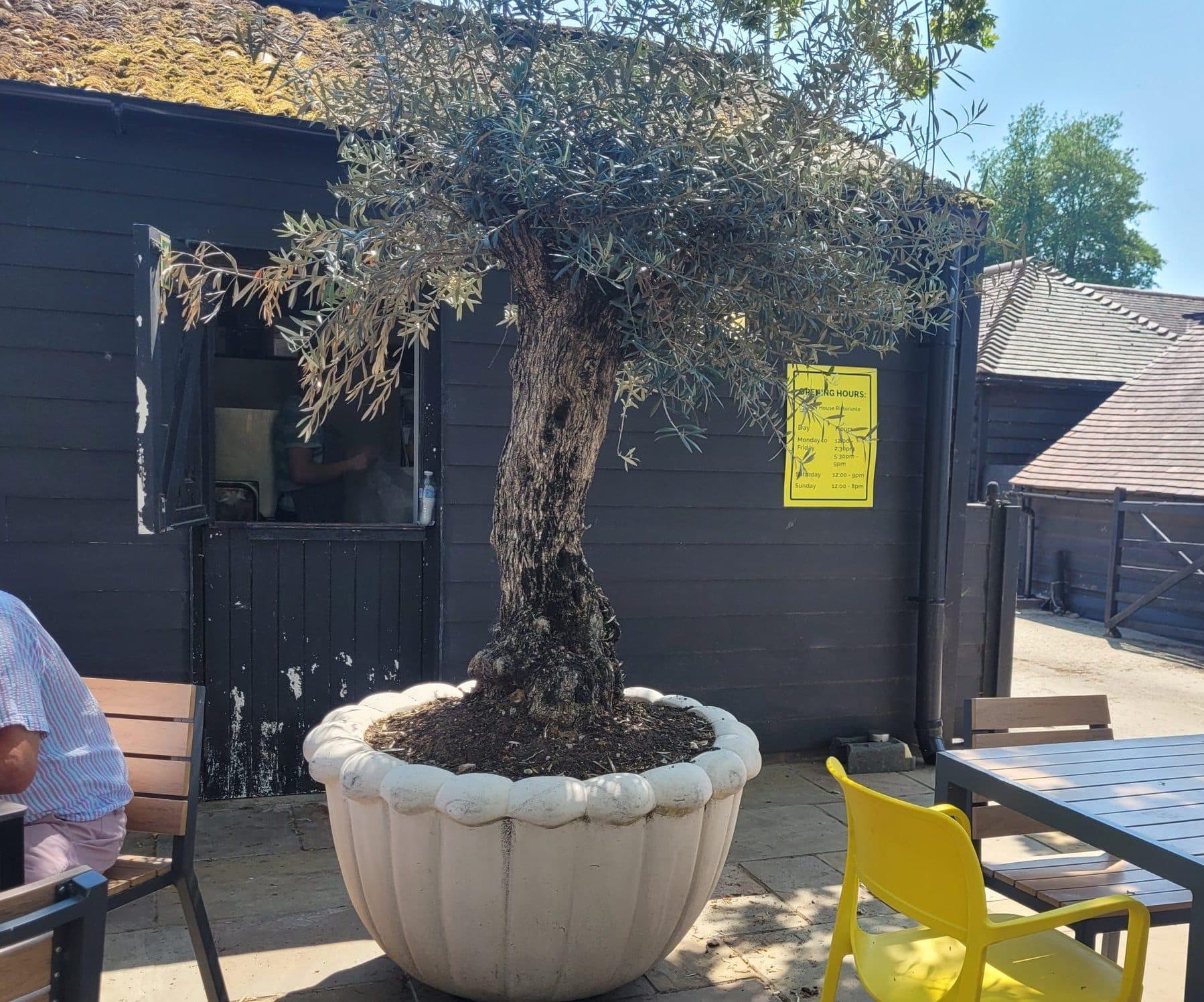
A wide, round tub suits a single specimen: an olive tree, a clipped bay, a Japanese maple in a sheltered corner, or a large box ball. The Large Oak Leaf Planting Tub was made with olive trees in mind, and the Dorchester and Circulum tubs give a similar presence with a different outline.
Troughs: along a wall or a window
Long planters sit along a house wall, under a window, at the edge of a terrace or beside a path. They're ideal for herbs, lavender, trailing plants and seasonal bedding. Look at the Long Jon planters, the Georgian style trough and the curved fronted troughs.
Pairs: either side of a door
Two matching tubs flanking a front door or a set of steps is one of the simplest ways to smarten an entrance. The Tudor tubs are sold as a pair for exactly that.
Clusters: a relaxed group
Sets of planters in different heights, like the Seona cluster and the Florence cluster, make an informal group for the corner of a patio or the edge of a gravel garden. Plant each one differently and the group still reads as one feature.

Sizing a pot for an olive tree
Olive trees are one of the most popular reasons to buy a large planter, and they're fairly forgiving if you get three things right.
- Size. Choose a pot a little larger than the tree's current root ball, leaving room for a few centimetres of fresh compost around the sides. A pot that's far too big holds a lot of wet compost the roots can't use, which is exactly what olives dislike.
- Shape. A wide, heavy base resists toppling. That matters more with a tall standard olive than the depth of the pot does.
- Compost. Olives want free drainage. A loam-based compost such as John Innes No. 3, with some horticultural grit mixed in, works well.
Water well through dry summer spells, but never let the pot stand in water. Olives cope with cold far better than they cope with cold, soggy roots.
Drainage comes first
Before planting, check how the planter drains. If you're unsure whether a particular design has a drainage hole, get in touch before you order and we'll tell you.
Raising the planter slightly on pot feet or a couple of tiles lets water escape freely instead of pooling underneath. This matters in winter too: waterlogged compost that freezes expands, and good drainage is the best protection against that.
Position it before you fill it
A large stone planter filled with damp compost is extremely heavy, so put it in its final position first. Check the base is level (on a lawn, set it on a paving slab so it doesn't sink), then fill and plant it where it stands.
Planting ideas through the year
- Permanent structure: olive, bay, box or yew topiary, a small Japanese maple in shelter.
- Troughs: lavender, rosemary, thyme and other herbs, or trailing plants spilling over the front.
- Seasonal: tulips in spring, followed by summer bedding, then violas and cyclamen for winter colour.
Finish and delivery
Our planters are cast in UK-quarried reconstituted stone and are frost proof. Choose a natural stone colour that weathers gradually, or a painted finish such as Antique Stone or Moss Green. All of them are on our colour options page.
Prices include delivery to most mainland UK postcodes; the delivery page explains how pallet delivery works. Browse the full troughs and tubs range, or see our urns and planting features for a more classical look.
The product in this post
Related posts
14 September 2026
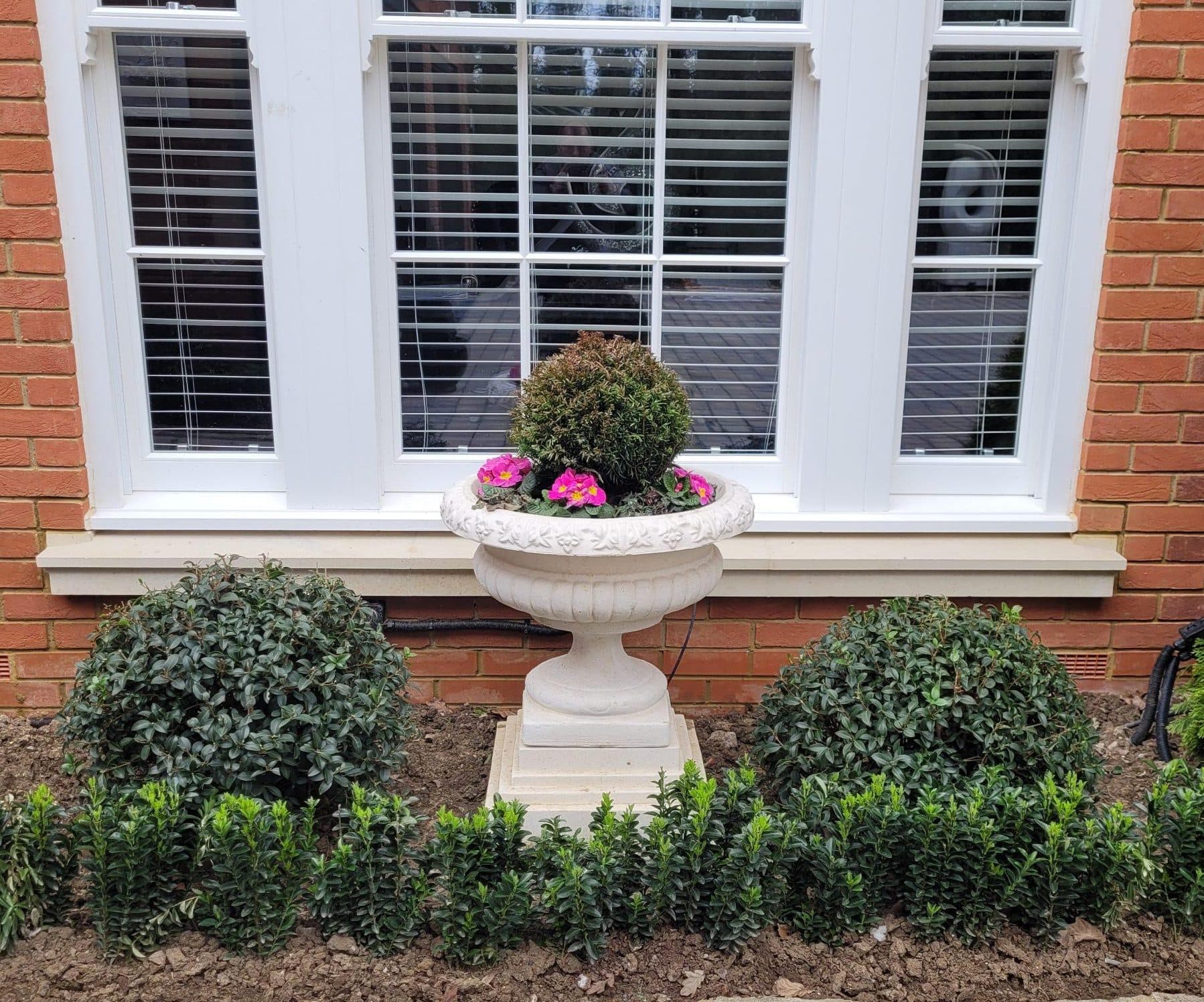
Garden Urns on Plinths: Pairs, Proportions and Planting
Stone urns are one of the oldest devices in garden design. When to choose a pair or a single urn, how to match an urn to a plinth, where they look best, and what to plant in them through the year.
14 September 2026
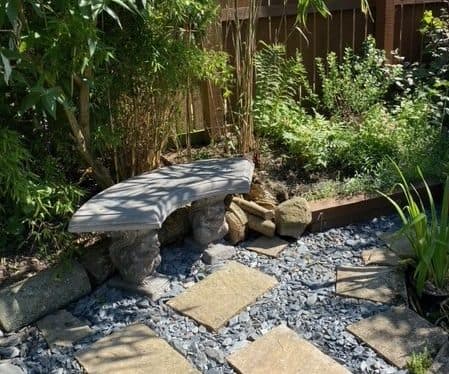
Stone Garden Benches: Curved or Straight, Small or Large?
A stone bench is part seat, part ornament, and it stays put all year. Where curved and straight benches work best, how to fit a small bench into a narrow space, the base it needs, and how to make it comfortable.
14 September 2026
Stone Bird Baths: Where to Put One and How to Look After It
Birds need clean water all year, and a stone bird bath gives them somewhere safe to drink and bathe. The best position, how deep the water should be, how to keep it clean, and what to do when it freezes.