
Garden Urns on Plinths: Pairs, Proportions and Planting
14 September 2026 · Geoffs Garden Ornaments · Buying Guides · garden design, garden urns, plinths
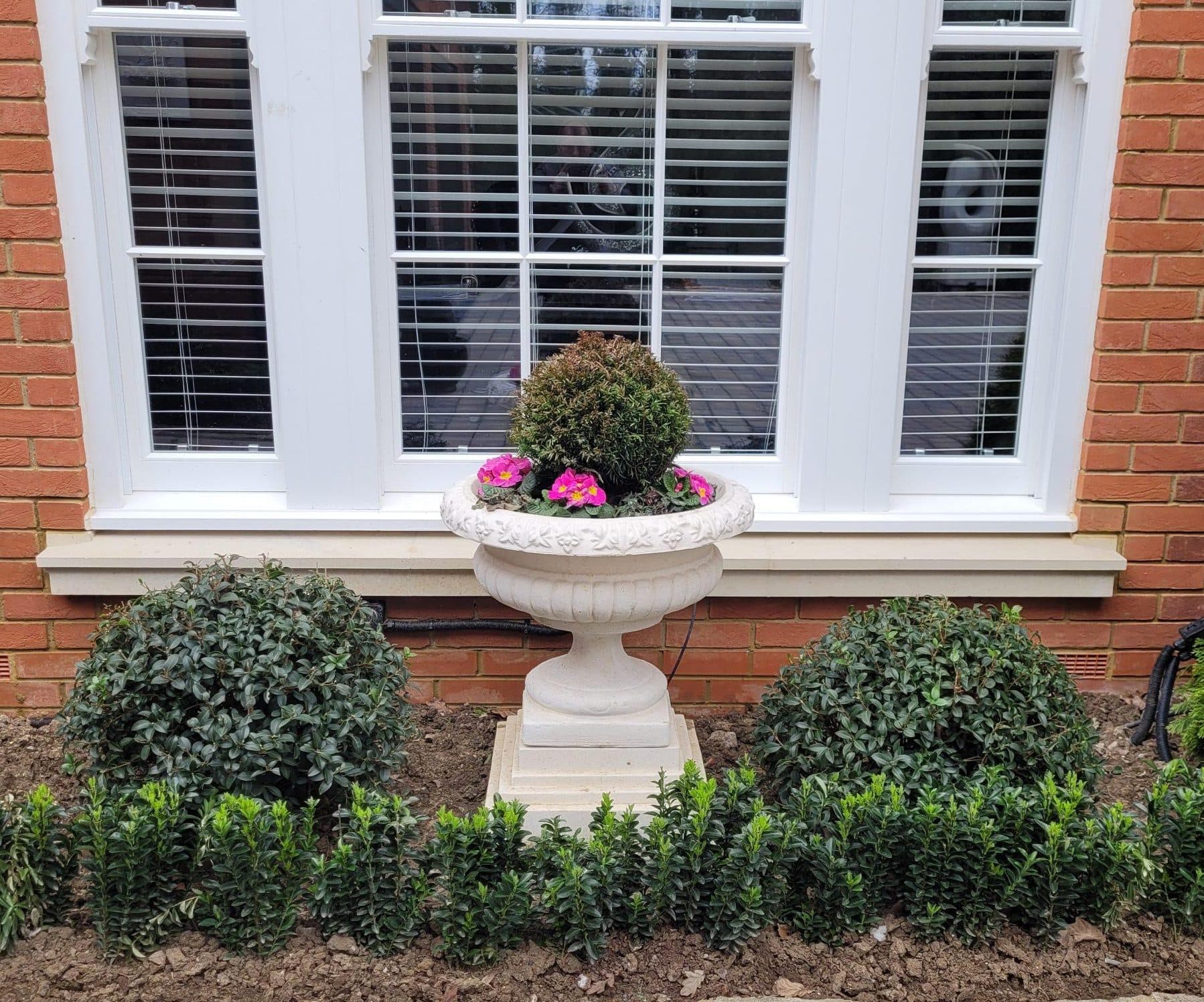
Formal gardens have used stone urns for centuries, for good reason. An urn marks a threshold, finishes a view and adds height where planting alone can't. It works in a large country garden and in a small front garden.
The difference between an urn that looks right and one that looks like an afterthought usually comes down to three choices: one or two, how high, and where.
A pair or a single urn?
Pairs frame something
Use a pair wherever there's an opening to emphasise:
- either side of a front or back door;
- at the top or bottom of a flight of steps;
- on each side of a gateway, or a gap in a hedge;
- flanking a bench or a garden seat.
Pairs rely on symmetry, so measure from the centre line of the door or path and place both at the same distance.
A single urn is a focal point
A single urn works at the end of a path or lawn, in the centre of a round bed, or in the middle of a long border where it gives the planting something to gather around. Here, height matters more, so a single urn is usually best on a plinth.
Most of our urns are available both as singles and as pairs, many with a matched plinth.
Choosing a style
You don't need to match your urn exactly to the age of your house, but it helps to stay in the same spirit. More ornate designs suit period homes and formal layouts; simpler outlines sit better with modern architecture and clean paving.
Our range includes Victorian, Georgian, Kensington, Royal Sussex, Rams Head and Vine urns. For a bold single statement, the Extra Large Victorian Urn holds its own at the end of a long view.
Getting the proportions right with a plinth
A plinth lifts the urn out of surrounding planting, clears low hedging, and brings the display closer to eye level. A few rules of thumb:
- Beside a door, a planted urn on its plinth generally looks best reaching somewhere between a third and half the height of the door.
- In a border, the urn's rim should sit clearly above the surrounding plants in summer, when they're at their tallest.
- The plinth top should be at least as wide as the urn's foot, so the base doesn't overhang.
The simplest way to get it right is to choose an urn already offered on a matched plinth, such as the Victorian urns on Regis plinths or the Kensington urns on Panel plinths. The proportions are already worked out. You can also browse plinths on their own to raise an urn you already have.

Setting them in place
Stand the plinth on a firm, level base, such as sound paving or a slab bedded on a compacted base on soil or lawn. Check it with a spirit level before the urn goes on top. Then step back to your usual viewing point before you plant, because it's far easier to adjust an empty urn.
What to plant, season by season
- All year: a clipped box ball or bay gives permanent structure and looks smart on its own.
- Spring: tulips or narcissi, planted in autumn.
- Summer: pelargoniums, trailing verbena or bacopa, and a taller centrepiece.
- Autumn and winter: heuchera, cyclamen, violas and trailing ivy.
An urn holds less compost than a tub, so it dries out quickly in summer. Water often in warm weather, and make sure water can drain freely. If you're unsure how a particular urn drains, get in touch.
Finishes and weather
Our urns are cast in UK-quarried reconstituted stone, with fibre reinforcement added to bowls and urns for extra strength. They're frost proof and can stay outside all year. Natural stone finishes weather gradually; painted finishes such as Antique Stone and Antique Rust give an aged look from the start. See our colour options.
Explore the full urns and planting features range. Prices include delivery to most mainland UK postcodes; see the delivery page for details.
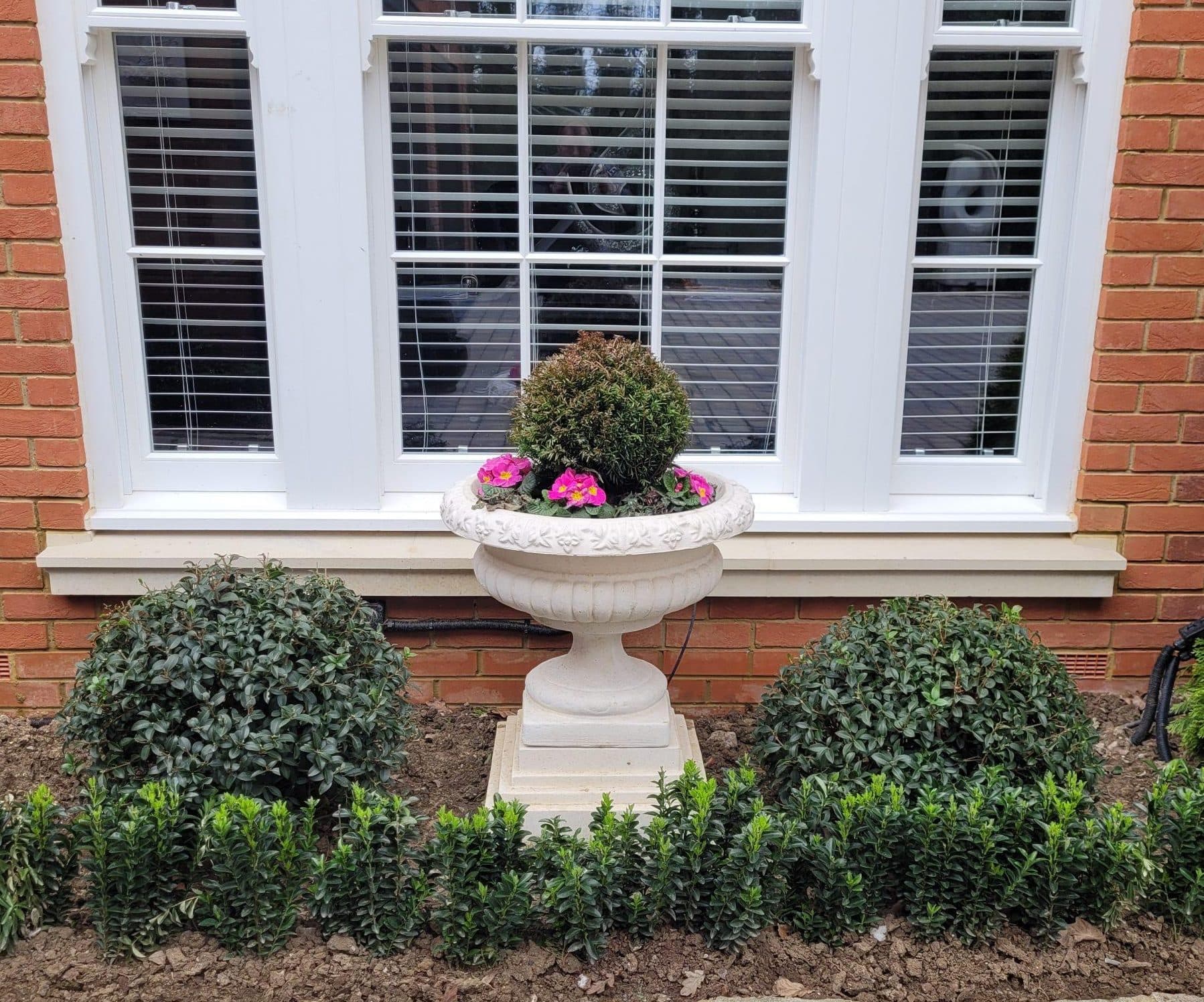
The product in this post
Related posts
14 September 2026
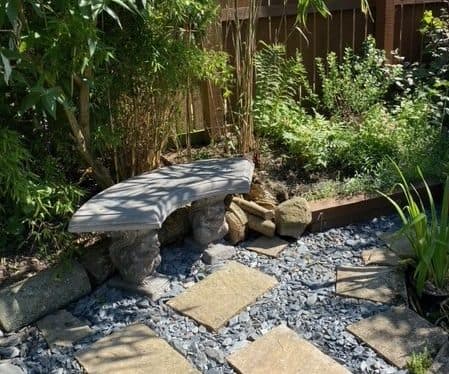
Stone Garden Benches: Curved or Straight, Small or Large?
A stone bench is part seat, part ornament, and it stays put all year. Where curved and straight benches work best, how to fit a small bench into a narrow space, the base it needs, and how to make it comfortable.
14 September 2026
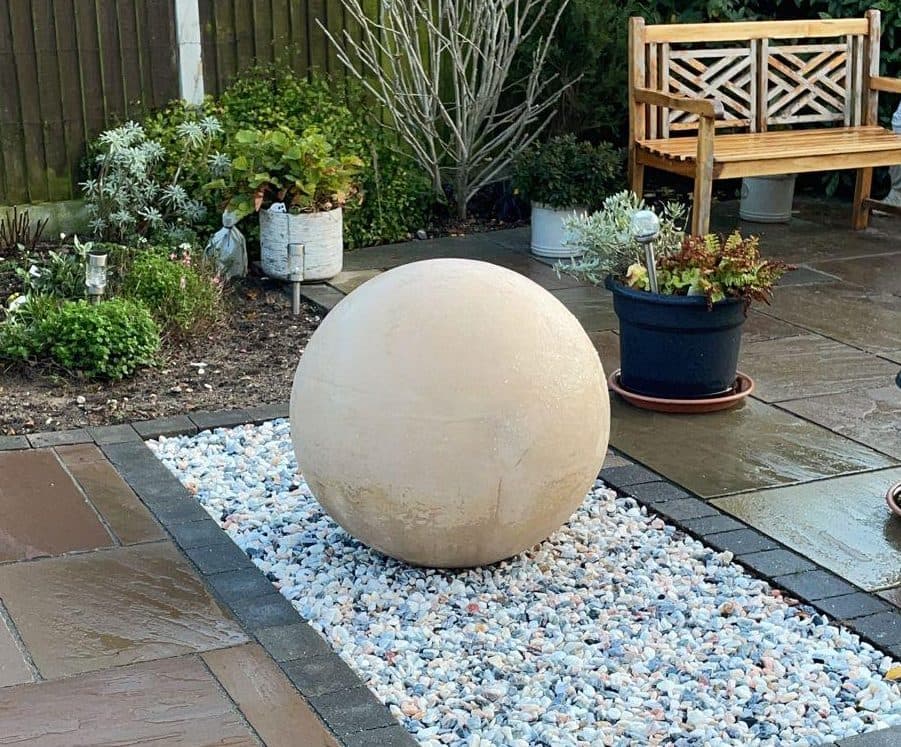
Large Garden Ornaments: How to Choose the Right Size, Spot and Base
Most garden ornaments are bought too small. How to judge scale from where you sit, where a large piece earns its place, what it needs underneath, and how a heavy stone ornament is delivered.
14 September 2026
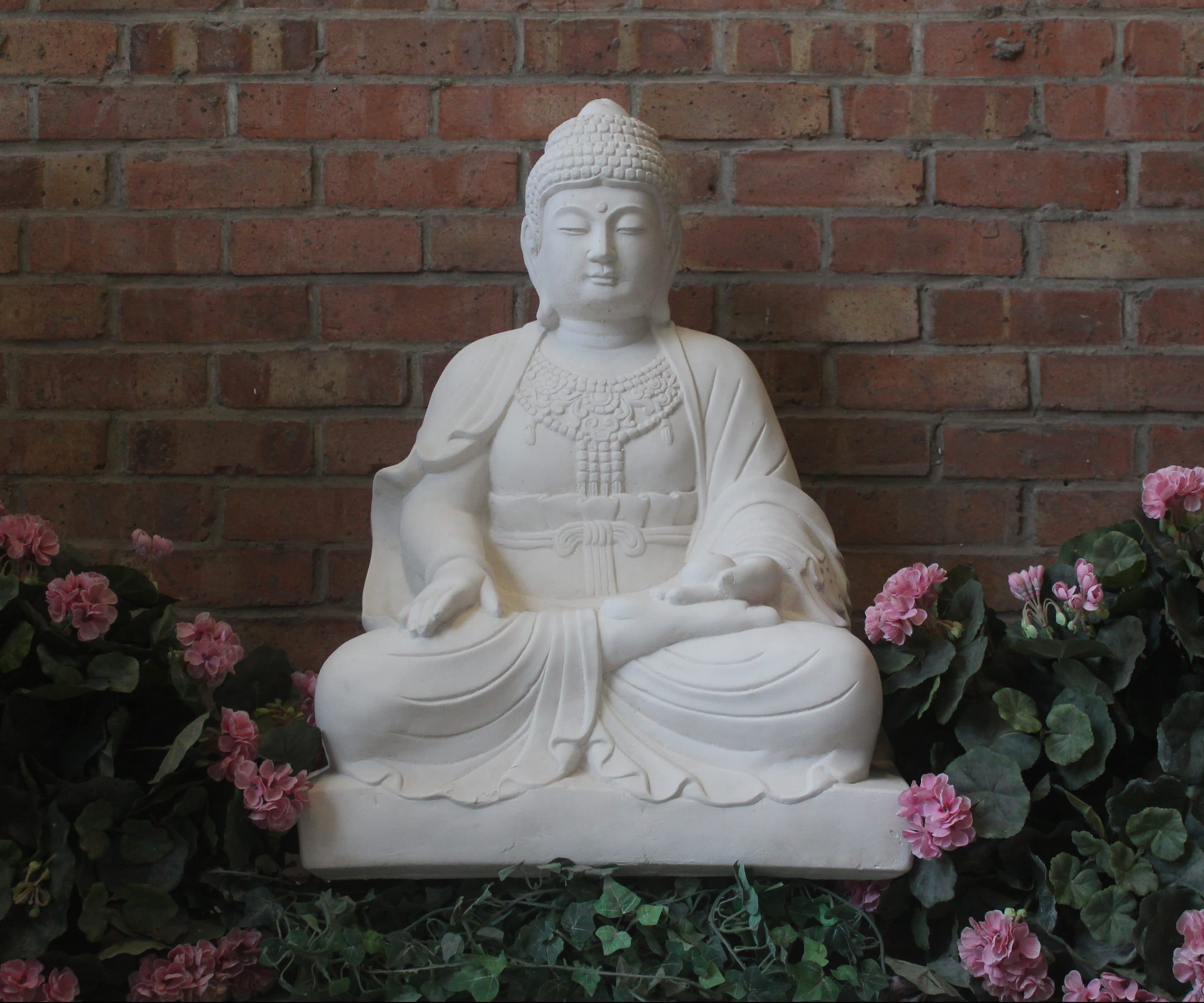
Garden Buddha Statues: What the Poses Mean and Where to Place One
Not every Buddha statue shows the same figure or the same idea. A guide to meditation and teaching poses, crowned Thai-style figures, the Laughing Buddha and Buddha heads, and how to place a statue thoughtfully in a garden.